Start with what your hands need to do
The warmest-looking gloves are not necessarily the pair you will reach for every day. Before comparing materials, picture the small tasks you perform outdoors: holding a coffee cup, opening a bag, turning a key or checking a transit app. A glove that makes those actions awkward may spend more time in your pocket than on your hands.
For short walks and everyday errands, a flexible, close-fitting pair may be more useful than a bulky insulated style. If you spend longer periods outside or often face wind and rain, you may need more protection, even if it adds some bulk. There is no single ideal glove: the best balance depends on the weather, your activity and how easily your hands get cold.
Look for warmth without unnecessary bulk
Warmth comes from a combination of material, lining and fit. Knit gloves can stretch comfortably around the fingers and work well in mild, dry conditions, but an open knit may let wind through. Leather can offer a smooth, flexible exterior and a tidy look; its warmth depends partly on its lining and how much room it leaves for your fingers to move. Fleece often feels soft and light, though some fleece gloves need an additional wind-resistant layer on blustery days.
Insulation can help in colder conditions, but more padding is not always better. Thick material around the fingers can make it harder to pick up small objects or feel what you are holding. If you need extra warmth, consider a glove with insulation concentrated around the back of the hand while the palm remains relatively supple. A textured or grippy palm can also make tasks easier without requiring you to squeeze objects tightly.
Liners offer another option. A thin pair worn alone in milder weather can slip beneath roomier gloves when it gets colder. This approach lets you adjust your handwear through the season, although the outer pair must have enough space to accommodate the liner without compressing your fingers.
Treat fit as a functional feature
Try gloves on with your fingers fully extended, then make a fist, pinch your thumb and forefinger together, and pick up a small object if possible. Your fingertips should reach comfortably near the ends without being pressed against them. Excess fabric at the tips can get in the way of precise movements, while a tight glove may restrict motion and feel colder than expected.
Pay attention to the thumb and cuff as well. A thumb that pulls when you grip something can make the whole glove feel stiff. The cuff should stay in place when you move but not dig into your wrist. If you expect to wear the gloves with a coat, check whether the cuff sits neatly under or over its sleeve. Small differences in cut can matter more than the size printed on the label, so compare styles when you can.
Match special features to real conditions
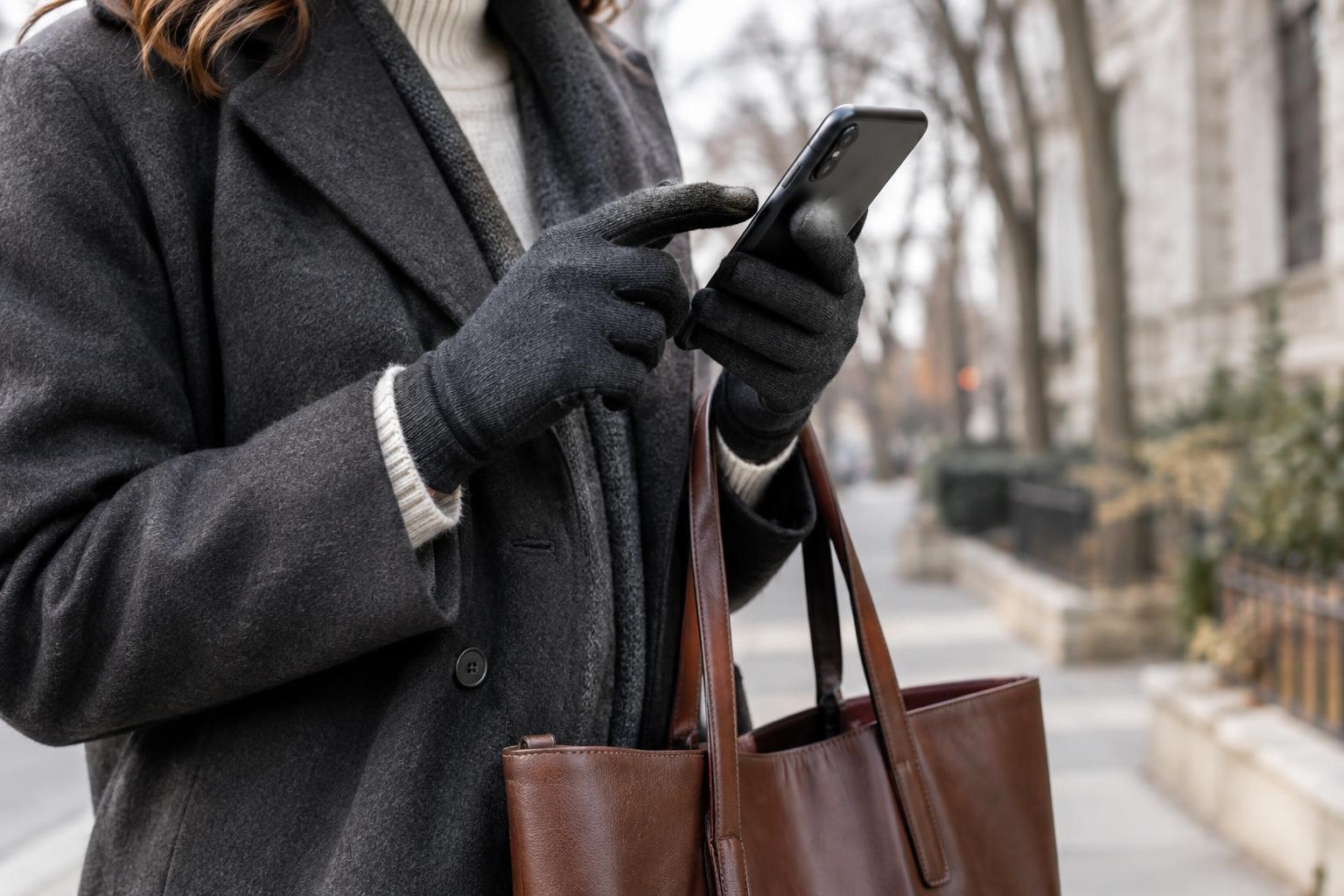
Touchscreen-compatible fingertips are convenient if you regularly use a phone outdoors, but test them before relying on them. Their responsiveness can vary with the fit of the glove and the size of the contact area. If you mostly need to read notifications rather than type long messages, a pair that handles simple taps may be enough.
For wet weather, check whether a glove is described as water-resistant or waterproof; those terms do not mean the same thing. Seams, cuffs and prolonged exposure can affect how dry your hands stay. For windy conditions, a tightly woven or wind-resistant outer material may be more valuable than a thick but airy knit. Reflective details or a secure clip can be useful if you commute in low light or frequently misplace one glove, but they are extras rather than substitutes for good fit.
Build a pair into your wardrobe and care routine
A versatile everyday glove can complement several coats without matching each one exactly. Black, brown, charcoal and navy tend to blend easily with outerwear, while a bright color can make a practical winter accessory feel more expressive. If your coat has bold pattern or texture, a simple glove can provide visual balance; with a plain coat, gloves are an easy place to add contrast.
Check the care label before cleaning, since knit, fleece and leather may need different treatment. Let damp gloves dry thoroughly in a well-ventilated spot rather than placing them against direct heat, which may affect their shape or finish. Store pairs together and avoid crushing them beneath heavy items. Taking care of a well-fitting pair helps preserve the flexibility that made it useful in the first place.