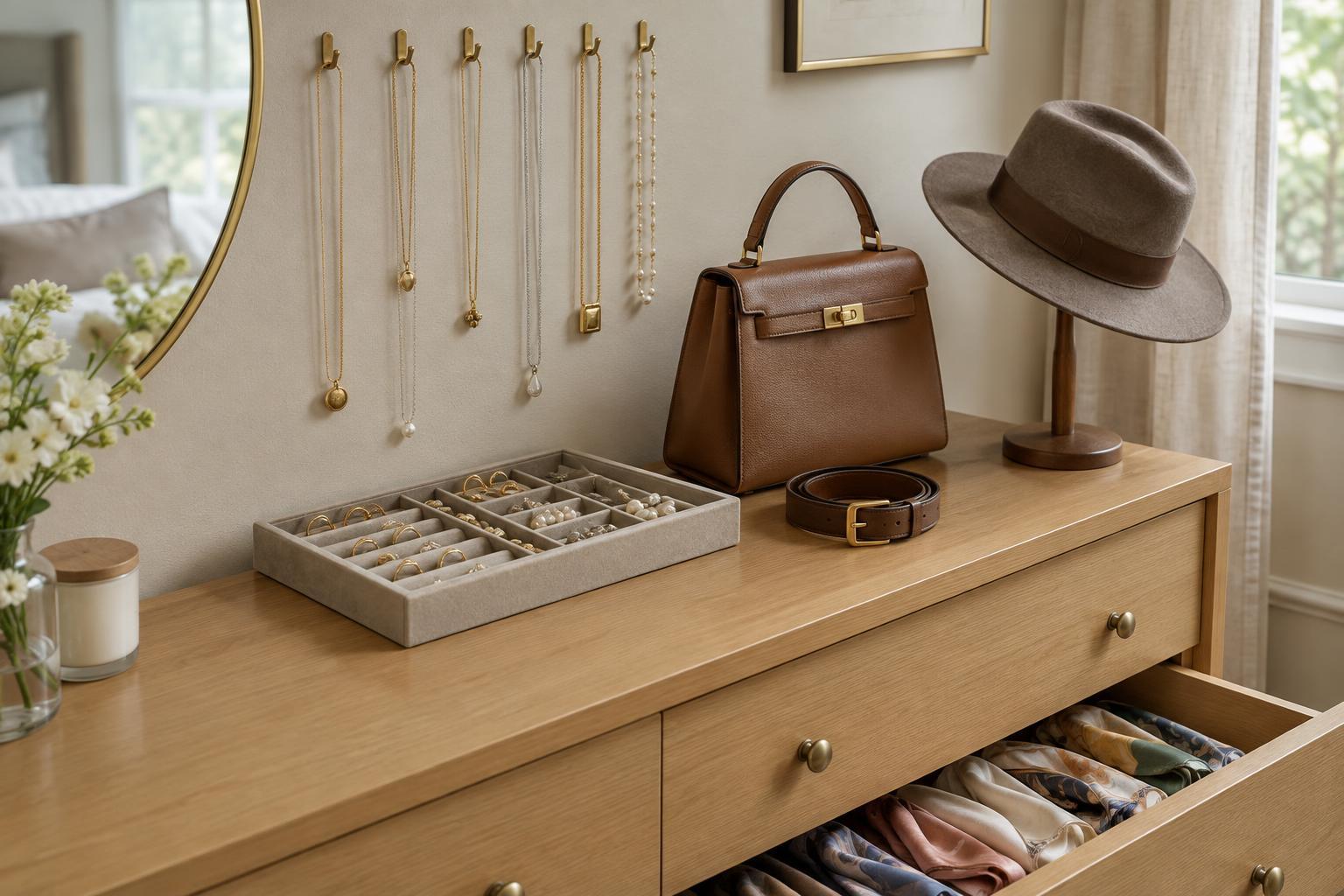
Giving every accessory the starring role
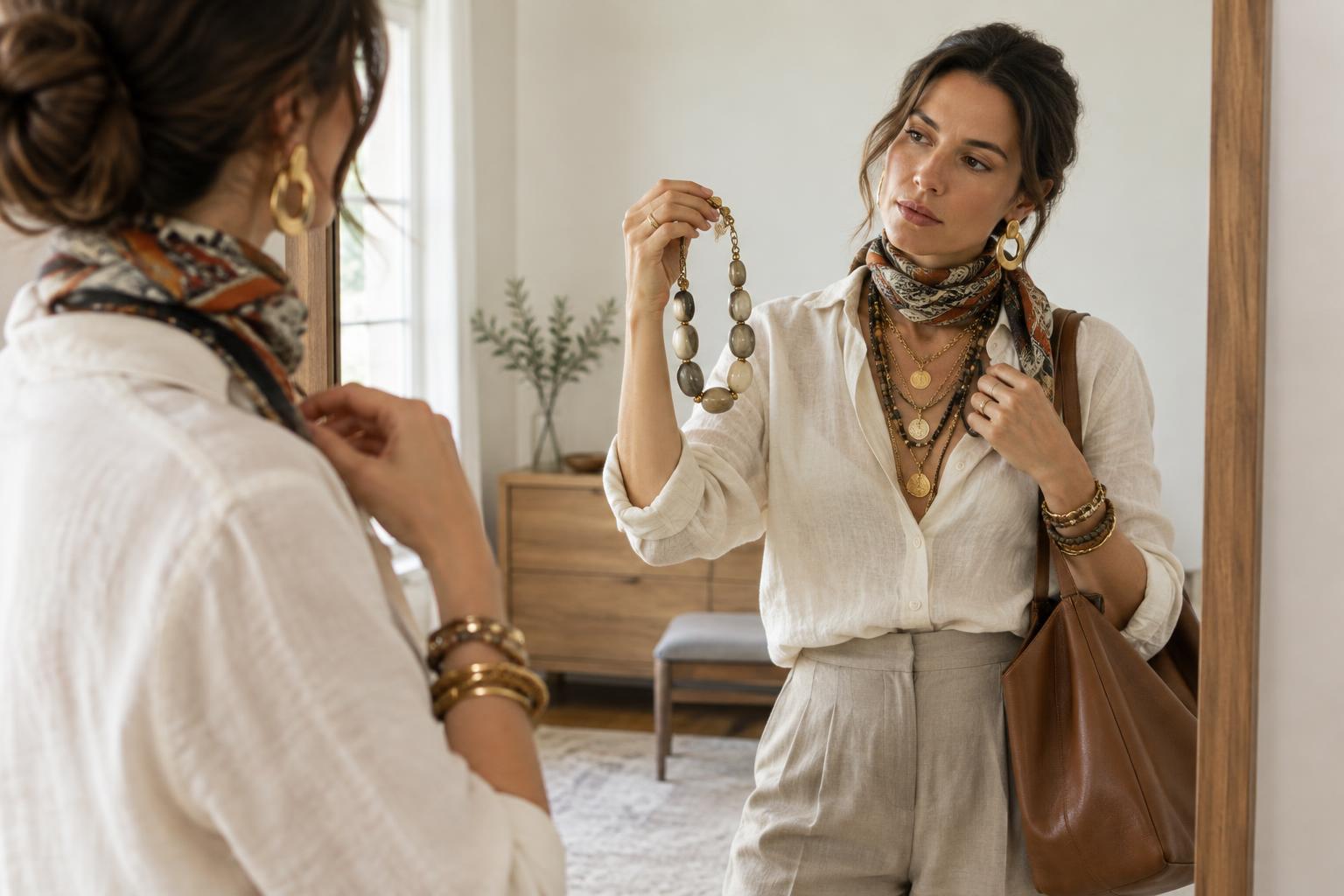
A crowded outfit is not necessarily one with lots of accessories. It is one where several pieces ask for attention in the same way. Large earrings, a bold necklace, an embellished belt and a patterned bag can each look great on their own. Worn together, they may leave the eye with nowhere to rest.
Before getting dressed, choose one detail you want people to notice first. If it is a sculptural pair of earrings, try a fine chain or an open neckline instead of another prominent piece near your face. If it is a colorful bag, let it carry the strongest color while your other accessories echo quieter tones from the outfit. This is a starting point, not a rule: a maximalist look can work beautifully when its pieces share a clear idea.
Stacking details in the same small area
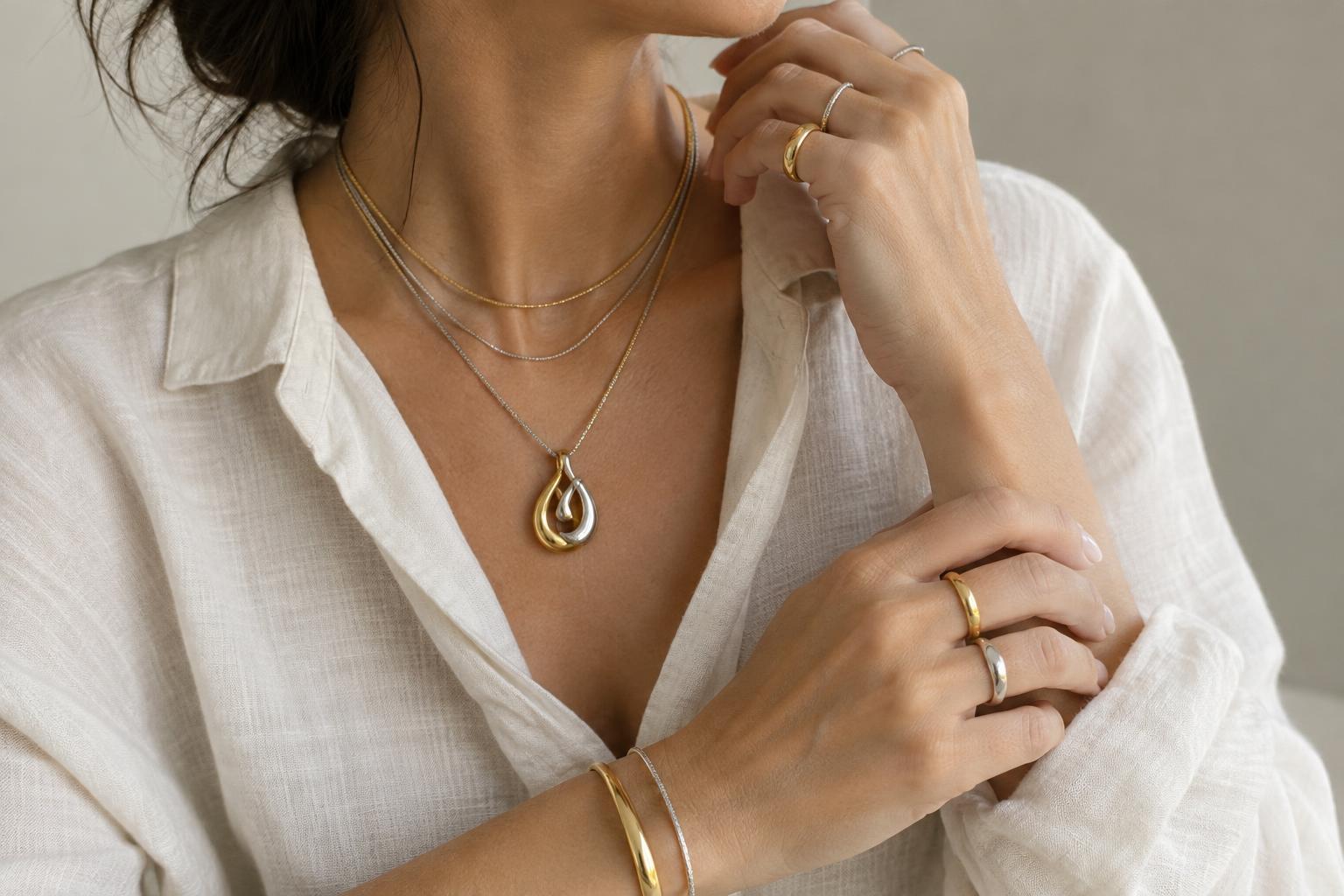
Accessories often feel busiest when they gather in one place. A scarf tied close to the neck, layered necklaces, statement earrings and a decorated collar all compete within a small frame. Similarly, a stack of bracelets, a large watch, several rings and ornate cuffs can make one wrist and hand feel visually heavy.
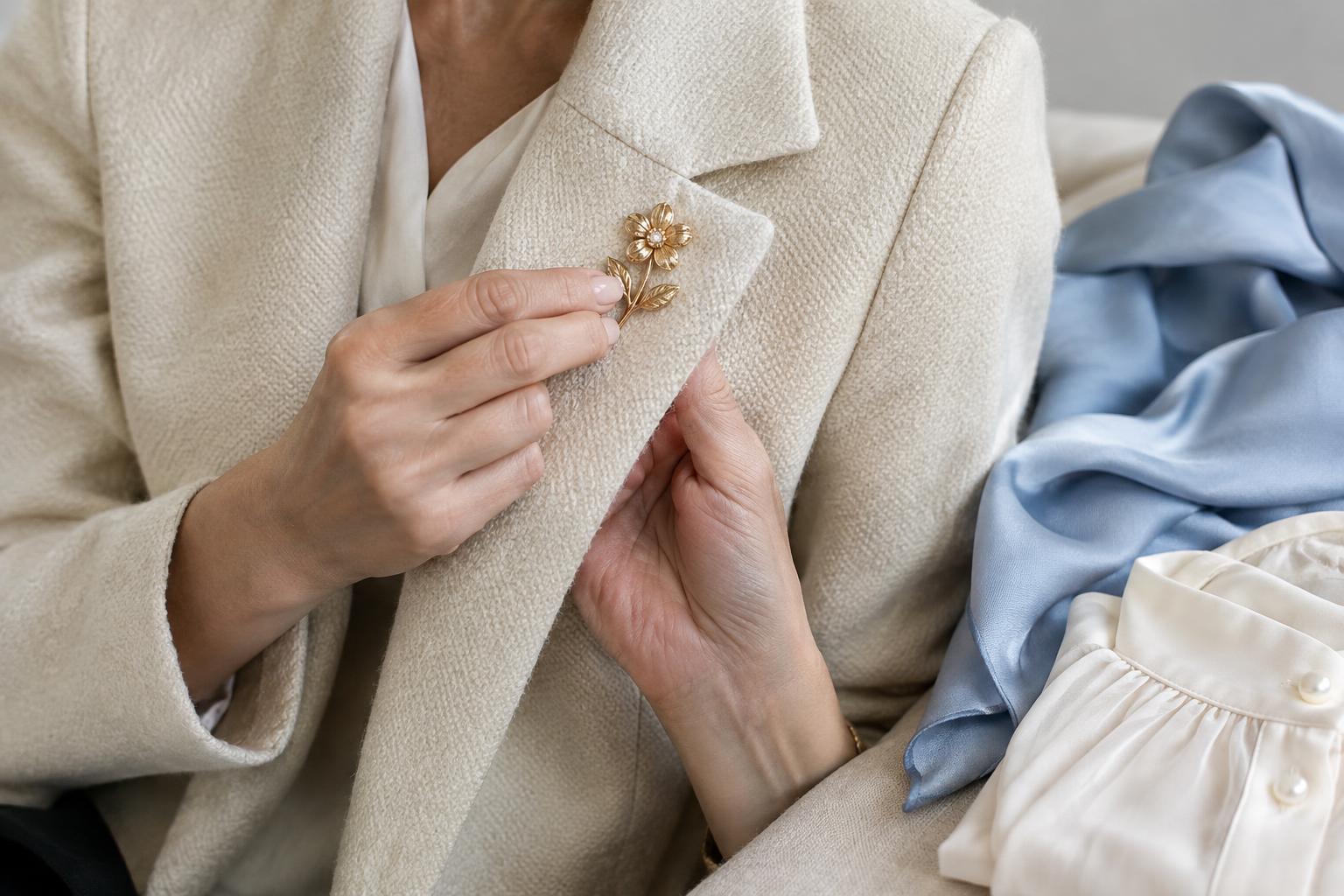
Try spreading details across the outfit. Pair bold earrings with a simple belt, or let a scarf provide the interest near your face while a small ring adds a quieter accent elsewhere. Pay attention to the clothing underneath, too. Ruffles, contrast stitching, shiny buttons and printed collars already contribute texture and pattern. An accessory does not need to fill every available space.
Mistaking matching for cohesion
Buying or wearing every accessory in the same bright color can seem like an easy way to make an outfit coordinated. Yet a red hat, red earrings, red belt, red shoes and red bag may repeat the same message so often that no single detail stands out. Exact matching can also make accessories feel added as a set rather than chosen to suit the clothes.
For a more relaxed connection, repeat a color once and vary its intensity or scale. A patterned scarf might contain a little green that appears again in a bag, while shoes remain neutral. Materials can link pieces as well: a smooth leather belt and a simple leather bag can feel related without matching perfectly. Mixing metals or finishes is also possible; keeping their shapes or overall mood similar can help the combination feel intentional.
Ignoring scale, texture and practical bulk
An accessory can crowd an outfit even when its color is quiet. Oversized shapes, high shine, thick straps and heavy hardware all add visual weight. A chunky necklace over a textured knit, for example, may disappear into the fabric in some places and bunch awkwardly in others. A wide belt over a loose top may create more folds than definition.
Look at the whole silhouette, not just the accessory in your hand. If clothing has generous volume or a strong print, a smaller or smoother piece can offer contrast. If the outfit is simple and close-fitting, a larger accessory may have room to shine. Comfort matters as well: a bag that pulls at a delicate layer or a scarf that needs constant adjusting can make a look feel fussy. Choosing one substantial piece and keeping the rest easier to wear often solves both problems.
Adding a final piece without looking again
The last accessory is often the one that tips an outfit from expressive to crowded. It might be a hat added because the look feels unfinished, or an extra necklace worn simply because it was laid out. Instead of asking whether the piece is attractive, ask what it contributes. Does it introduce a useful contrast, connect two colors or serve a practical purpose? If it repeats something already present, try the outfit without it.
Take a moment to view the look from a few steps away, then check it while moving. Notice where your eye goes first and whether anything pulls attention away from the effect you intended. You can also remove one piece, compare both versions and choose the one that feels more like you. Editing is not about wearing the fewest accessories possible. It is about giving your favorite details enough space to be seen.