Start with the label, not your usual laundry routine
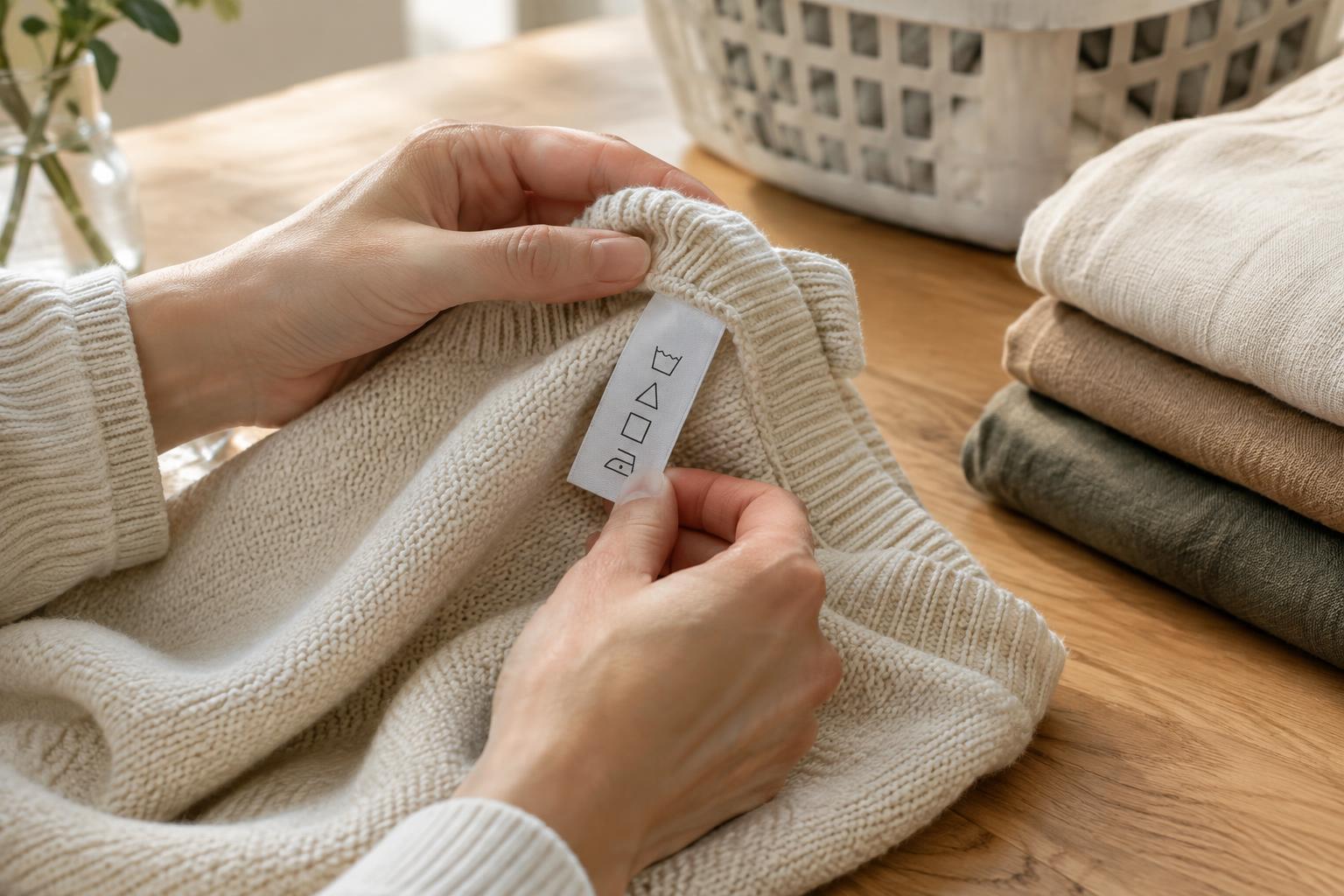
A garment’s care label is a quick guide to the treatment its fabric, color, trim and construction can tolerate. Two shirts that feel similar may need different care because one has a delicate print or lining. Before washing something new, find its sewn-in label and read the full sequence of symbols rather than relying on the fabric name alone.
Care symbols are usually arranged by task: a wash tub for washing, a triangle for bleaching, a square for drying, an iron for ironing and a circle for professional cleaning. A cross over a symbol means not to use that method. The label describes permitted care, not necessarily what you must do every time. If it allows a warm wash, for example, a cooler wash may still be a sensible choice for a lightly worn item, provided it gets clean.
Decode washing instructions
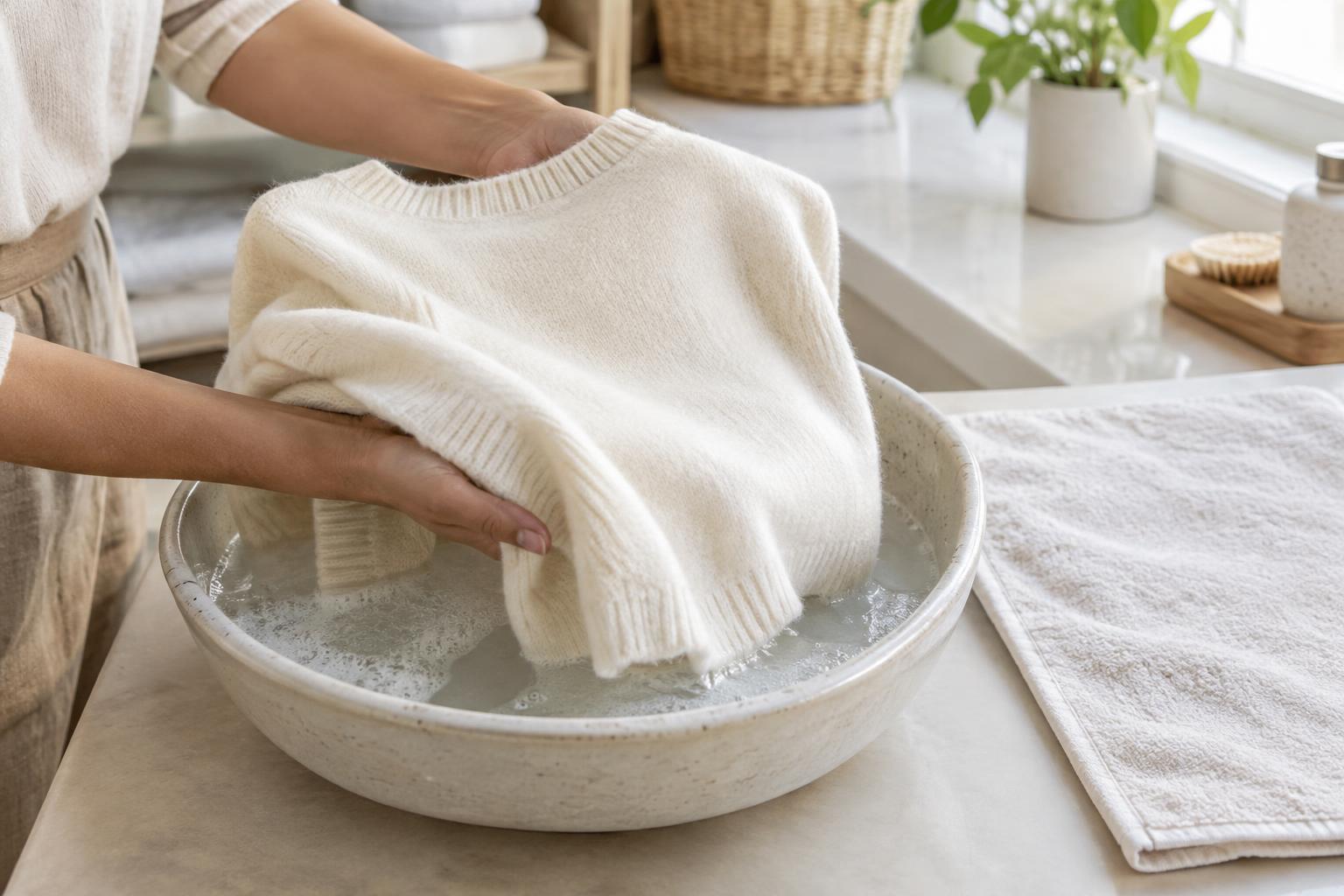
The tub symbol tells you whether and how to wash a garment. A number inside the tub is the maximum wash temperature, usually shown in degrees Celsius. A hand in the tub means hand wash; a crossed-out tub means do not wash. If the label gives a temperature, there is generally no need to use that exact temperature for every load.
Look beneath the tub for lines. One line calls for a gentler wash cycle, while two lines call for a very gentle cycle. These marks matter for items that can stretch, crease or lose their shape through agitation. A gentle cycle is more than a cooler setting: it typically changes how the machine moves the clothes. Leave delicate garments room in the drum and consider a laundry bag for items with straps or fine details. If colors might run, wash the item separately at first and check it before adding it to a mixed load.
Read bleach and drying symbols before treating a stain
A triangle covers bleaching. An empty triangle permits bleach; a triangle with two diagonal lines permits only non-chlorine bleach; a crossed-out triangle means do not bleach. Check this symbol before reaching for a stain-removal product, since some products contain bleaching agents. When in doubt, test a suitable treatment on an inconspicuous area and follow the product directions.
Drying instructions use a square. A circle inside the square means tumble drying is permitted, while a cross over that symbol means do not tumble dry. Dots inside the circle indicate heat level: fewer dots mean lower heat. Line-drying marks inside a square indicate that the garment should hang to dry, while a horizontal line indicates flat drying. A diagonal mark in a corner indicates drying in the shade. Flat drying is especially useful for pieces that could stretch under their own weight, such as some knits. Whatever the symbol permits, avoid leaving clothes in the dryer longer than needed.
Understand ironing and professional cleaning marks
The iron symbol shows whether pressing is allowed. One dot indicates low heat, two indicate medium heat and three indicate high heat. A crossed-out iron means do not iron. If a garment has a print, embellishment or textured finish, take extra care even when ironing is permitted: turn it inside out where appropriate and avoid pressing directly on sensitive details. A pressing cloth can provide a buffer, but it does not make an unsuitable heat setting safe.
A plain circle refers to professional cleaning. Letters inside it give the cleaner instructions about the method or solvent; you do not need to decode those letters to sort a household wash. A crossed-out circle means do not dry clean. If a label calls for professional cleaning, show the whole label to the cleaner, especially when the garment has mixed materials, trims or a noticeable stain.
Turn symbols into a workable routine
When sorting laundry, look for the most restrictive instruction first. Separate items that cannot be machine-washed, then group the rest by color, fabric weight and compatible wash settings. A sturdy cotton T-shirt and a delicate blouse might both allow washing, but they may not belong in the same cycle. Check drying instructions before starting, too, so you can remove pieces that need to air-dry when the wash ends.
Labels can fade or be cut out. If you are unsure how to care for an unlabeled item, begin conservatively: use mild detergent, cool water and gentle handling, and air-dry rather than applying heat. This approach cannot guarantee a perfect result for every fabric, but it gives you a safer starting point than a hot wash and tumble dry. Once you learn the five basic shapes, a care label becomes less of a puzzle and more of a simple plan for keeping clothes wearable.