Start with the fabric and care label
Stretch clothing gets its flexibility from elastic fibers, often called elastane or spandex, blended with materials such as cotton, polyester or nylon. That is why a pair of stretch jeans may need different care from a pair of workout leggings. Before washing a new item, check its care label for the recommended temperature, cycle and drying method. Treat those directions as the starting point, especially when the garment has padding, bonded seams, delicate trim or a special finish.
Washing wears on clothes through a combination of water, detergent, friction and heat. Elastic fibers are particularly worth protecting from excessive heat and force because a garment that loses its recovery can feel loose even when the rest of the fabric still looks good. You do not need a complicated routine. A few consistent choices—sorting carefully, washing gently and drying with care—will do more than a cupboard full of specialty products.
Prepare clothes to reduce friction
Sort stretch pieces by color and by how roughly they might rub against one another. A load of soft tops and leggings is gentler than a load mixed with heavy jeans, towels or clothing with exposed zippers and hooks. Close fastenings, turn printed or dark items inside out, and put small or delicate pieces in a mesh laundry bag. Leave enough space in the machine for clothes to move; a tightly packed drum can make rinsing less effective and increase rubbing.
Not every stretch item needs washing after one wear. If a piece is clean and free of noticeable odor, airing it between wears may be enough; sweaty or soiled clothing should be washed rather than left in a hamper for days. If a stain needs attention, follow the garment’s instructions and test any treatment on a hidden area first. Blot or work gently at the mark instead of scrubbing hard enough to distort the fabric.
Choose a gentle wash, not an extreme one
For machine-washable stretch clothing, a cool or lukewarm wash and a gentle cycle are useful defaults when the label permits them. The aim is to clean the garment without more agitation or heat than it needs. Use an appropriate amount of mild detergent for the load and soil level; adding extra detergent does not necessarily improve cleaning and can leave residue if it is not rinsed away. If your machine offers an extra rinse and clothes feel soapy after washing, that setting may help.
Avoid chlorine bleach unless the care label specifically allows it. Fabric softener is also best used with the label in mind: some performance fabrics discourage it because residue can affect how they feel or handle moisture. For a particularly delicate stretch piece, hand-wash only if its label allows it. Swish it gently in water with a small amount of detergent, rinse thoroughly, and press out water without twisting or wringing.
Dry without stretching or overheating
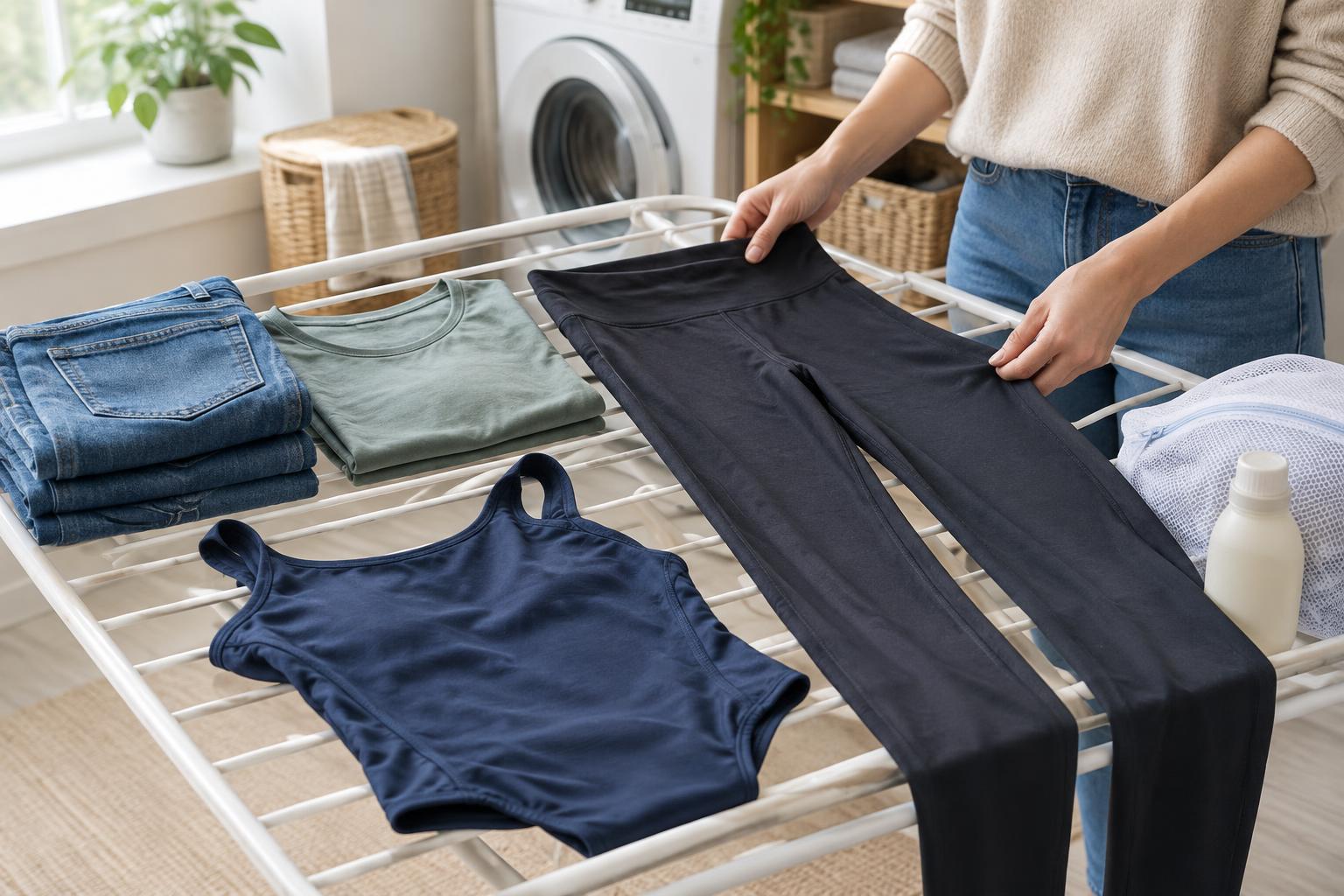
Check the label before using a dryer. If tumble drying is allowed, choose the recommended setting and take the item out once it is dry rather than leaving it in a hot drum. Air drying is a helpful alternative for many stretch garments: smooth them into shape and lay them flat or hang them where air can circulate. Keep heavy, waterlogged pieces supported so their own weight does not pull them out of shape.
Keep drying clothes away from direct, intense heat such as a radiator, and avoid ironing stretch fabrics unless the label provides instructions for doing so. Before putting a garment away, make sure thick seams, waistbands and padded areas are fully dry. Folding leggings or stretch denim rather than hanging them by a narrow point can also help prevent unwanted pulling during storage.
Adjust the routine to the item
A stretch-cotton T-shirt may be comfortable in a regular mixed load, while a supportive sports bra or swimsuit often benefits from gentler handling. Rinse swimwear after use when practical, then wash it according to its label; pool chemicals, salt and sunscreen residue are good reasons not to leave it sitting damp in a bag. For garments with straps, molded parts or decorative details, a mesh bag can help prevent snagging even when the main fabric is sturdy.
If an item repeatedly comes out stiff, check whether you are using too much detergent or overloading the washer. If it comes out misshapen, consider a gentler cycle, less spinning or better support while drying. Stretch fibers will not last forever, but matching the wash to the garment—and avoiding unnecessary heat, friction and pulling—can help your favorite pieces remain comfortable and wearable for longer.