Know what you’re removing
Lint and pills may look similar from a distance, but they need different treatment. Lint is loose fiber or fluff resting on a garment’s surface. It may come from towels, blankets or another item in the wash. Pills are small balls of fiber still attached to the fabric, often where the material rubs against itself, a bag strap or another layer of clothing.
Start by spreading the garment on a clean, flat surface in good light. If the fluff lifts away with a gentle touch, treat it as lint. If it stays attached, it is probably a pill. Check the care label and look closely at the fabric before using a tool: a sturdy sweatshirt can tolerate more handling than an open knit, lace trim or a fine sweater.
Lift loose lint with the lightest touch first
For everyday lint, try a lint roller on a dry garment. Use short passes and replace the sheet when it stops picking up fibers. A reusable lint brush is another option, particularly for coats and other relatively smooth surfaces. Brush in the direction of the fabric rather than scrubbing back and forth.
If you do not have a roller, press a small piece of tape onto an inconspicuous area to make sure it does not pull at the finish, then dab the lint gently. Avoid strong adhesive on delicate, loosely woven or embellished pieces. For a few stray fibers, clean fingers may be enough.
Lint that keeps appearing after laundry may be easier to prevent than to remove. Separate lint-shedding items, such as fluffy towels, from clothes that readily collect fibers. Check pockets for tissues before washing, and avoid crowding the machine so garments can move and rinse more freely.
Remove pills without catching the fabric
For a small number of pills, hold the fabric steady and lift each pill with your fingers if it releases easily. Do not tug at fibers that resist; pulling can leave a thin spot or distort a knit. Small, sharp scissors can trim individual pills, but keep the blades above the fabric surface and work slowly.
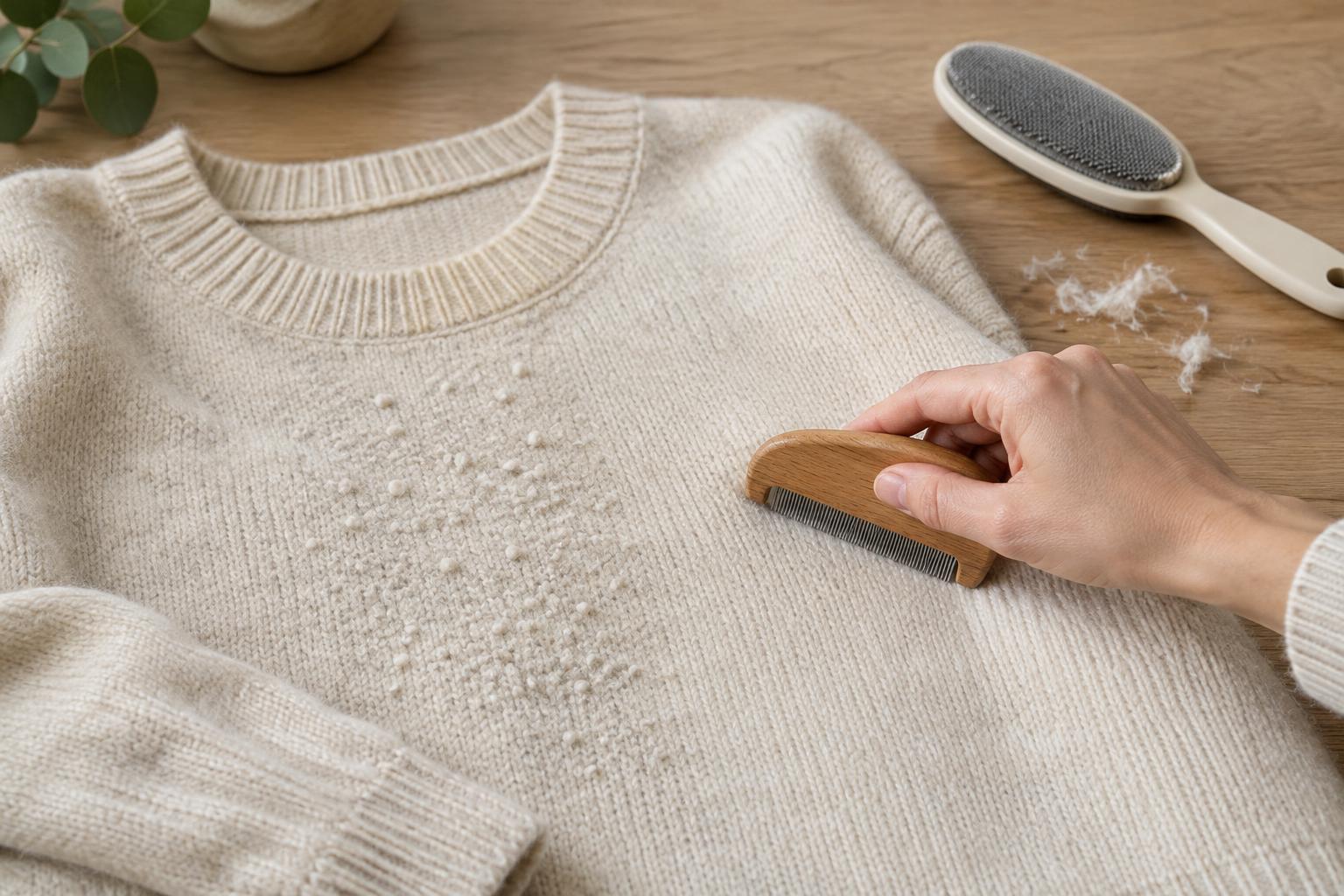
A fabric comb can be useful on some sturdy knits. Test it in a hidden area, then make light, short strokes while supporting the garment underneath. An electric fabric shaver can cover a larger area, but use it only on fabric that lies flat enough for the head to glide without catching. Start with the gentlest setting or greatest clearance available, test first, and let the tool do the work rather than pressing down.
Skip aggressive scraping and ordinary razors, especially on fine yarns, loose loops, raised textures or embroidery. These methods can cut threads along with the pills. If a garment is especially delicate or valuable to you, leaving a few pills in place may be safer than trying to make the surface perfectly smooth.
Match the method to the garment
Smooth cotton shirts and sturdy sweatshirts often respond well to a lint roller or a careful pass with a fabric shaver. Ribbed knits need more caution because a tool can catch the raised ridges. Work on one small area at a time and reposition the fabric so it lies as flat as possible.
For fine sweaters, begin with a soft brush or careful hand removal. Support the knit from below instead of stretching it taut, which may change its shape. On dark coats, loose pale lint is often more visible than actual pilling; try brushing before reaching for a cutting tool. Avoid running any tool over buttons, seams, zips or decorative details.
Keep clothes smoother between cleanups
Pilling comes from friction, so it may return even after careful removal. Turn suitable garments inside out before washing, follow their care labels and choose a gentle cycle when appropriate. Washing similar textures together can limit rubbing against rougher pieces. Let knits dry as their labels direct; laying a sweater flat can also help it retain its shape.
Pay attention to repeated contact in daily wear. A crossbody strap may create pills on one side of a top, while a desk edge may wear the same area of a sleeve. Rotating what you wear and how you carry a bag can spread out that friction. A quick lint check before putting clothes away keeps upkeep manageable, without repeatedly working the same patch of fabric.