Let condition, not a calendar, decide
There is no single wash schedule that suits every pair of jeans. If they still look clean, smell fresh and feel comfortable, you can usually wear them again before laundering. Check the waistband, seat and knees, where body oils and everyday grime tend to collect. A quick inspection is more useful than counting wears alone.
Wash jeans sooner if they have a noticeable odor, visible dirt or a spill that spot-cleaning cannot remove. Heat, exercise and long days of wear can also make a full wash necessary. If jeans have been exposed to something you would not want to transfer to a chair or other clothes, do not rely on airing them out. Treat the issue and launder the pair according to its care label.
Washing less often can help reduce wear from repeated machine cycles, but stretching the time between washes is not a goal in itself. The right balance is simply to keep jeans comfortable and clean without laundering them when they do not need it.
Refresh jeans after an ordinary wear
Before putting jeans away, empty the pockets and let the fabric air out. Hang them where air can circulate, rather than folding them immediately into a crowded drawer. This gives mild moisture from wear a chance to dry. Keep dark or brightly colored denim out of prolonged direct sunlight, which may fade exposed areas unevenly.
If the knees or seat have relaxed, hanging the jeans may help them feel less rumpled, though it will not restore a stretched-out fit. For creases, follow the garment’s care label before using steam or an iron, especially if the jeans have a coating, embellishments or a printed finish. Airing can help with a faint stale smell; it will not clean away sweat, oils or a persistent odor.
Spot-clean small marks without spreading them
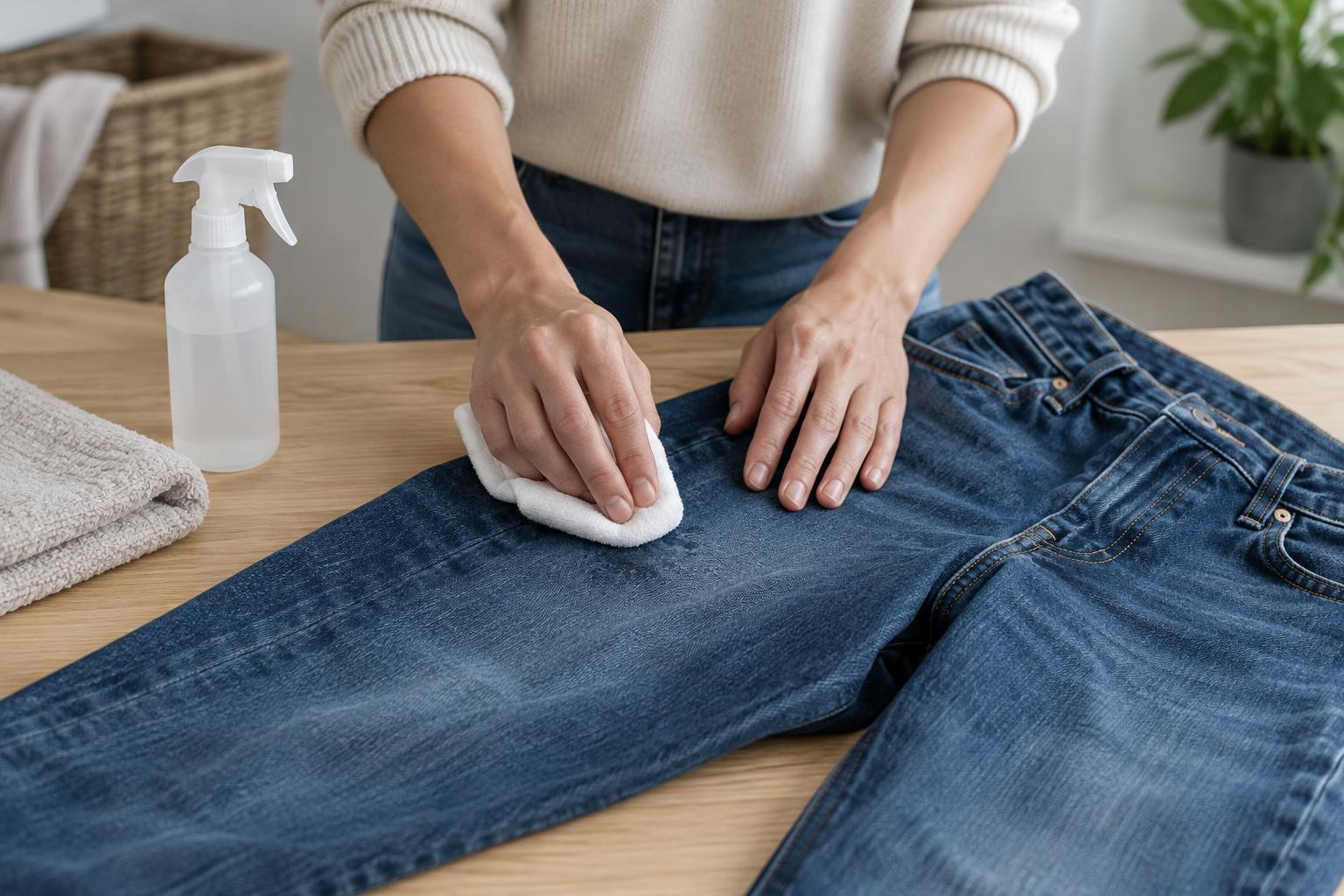
Deal with a fresh spill before it settles into the fabric. Blot liquid with a clean cloth instead of rubbing, which can push it farther into the weave. For a small mark, lightly dampen a cloth with cool water and dab from the outside toward the center. If water alone is not enough, try a tiny amount of mild liquid detergent diluted in water, then dab away the residue with another damp cloth.
Test any cleaning method on an inconspicuous area first, particularly on dark, raw or colored denim. Too much scrubbing can leave a pale patch even after the stain is gone. Use as little moisture as practical and let the area dry fully before wearing or storing the jeans. If a mark remains obvious, a full wash may produce a more even result than repeated spot treatments.
Check the care label and the product instructions before using a stain remover. Avoid adding several cleaning products at once: that makes it harder to know what is affecting the dye or finish. A large spill, widespread grime or lingering odor calls for washing the whole garment.
Wash gently when it is time
Start with the care label, since denim can contain stretch fibers, coatings or decorative details that need different handling. For a typical machine-washable pair, close the zip or buttons, turn the jeans inside out and wash them with similar colors. A gentle cycle with cool water and a modest amount of detergent is a sensible default when the label allows it. Leave enough room in the machine for the fabric to move and rinse.
Dark denim, especially a new pair, may release dye. Washing it separately the first few times can help protect lighter clothes. After washing, reshape the jeans and hang them to dry if the label permits. Keep them away from strong direct heat; high dryer temperatures can be hard on stretch fibers and may cause shrinkage. If you use a dryer, follow the label and choose an appropriate setting.
Adjust the routine to the pair
Raw denim can show wear and fading more distinctly than heavily prewashed jeans, so spot-cleaning gently and washing when needed may help you maintain its appearance. Stretch denim benefits from avoiding excessive heat. Embroidered, coated or embellished jeans deserve an especially careful label check before any washing, steaming or stain treatment.
The easiest routine is also the most flexible: air jeans after a light wear, treat small marks promptly and wash when the fabric is genuinely dirty or no longer fresh. That approach works whether the pair is a frequently worn everyday staple or one you save for particular outfits.