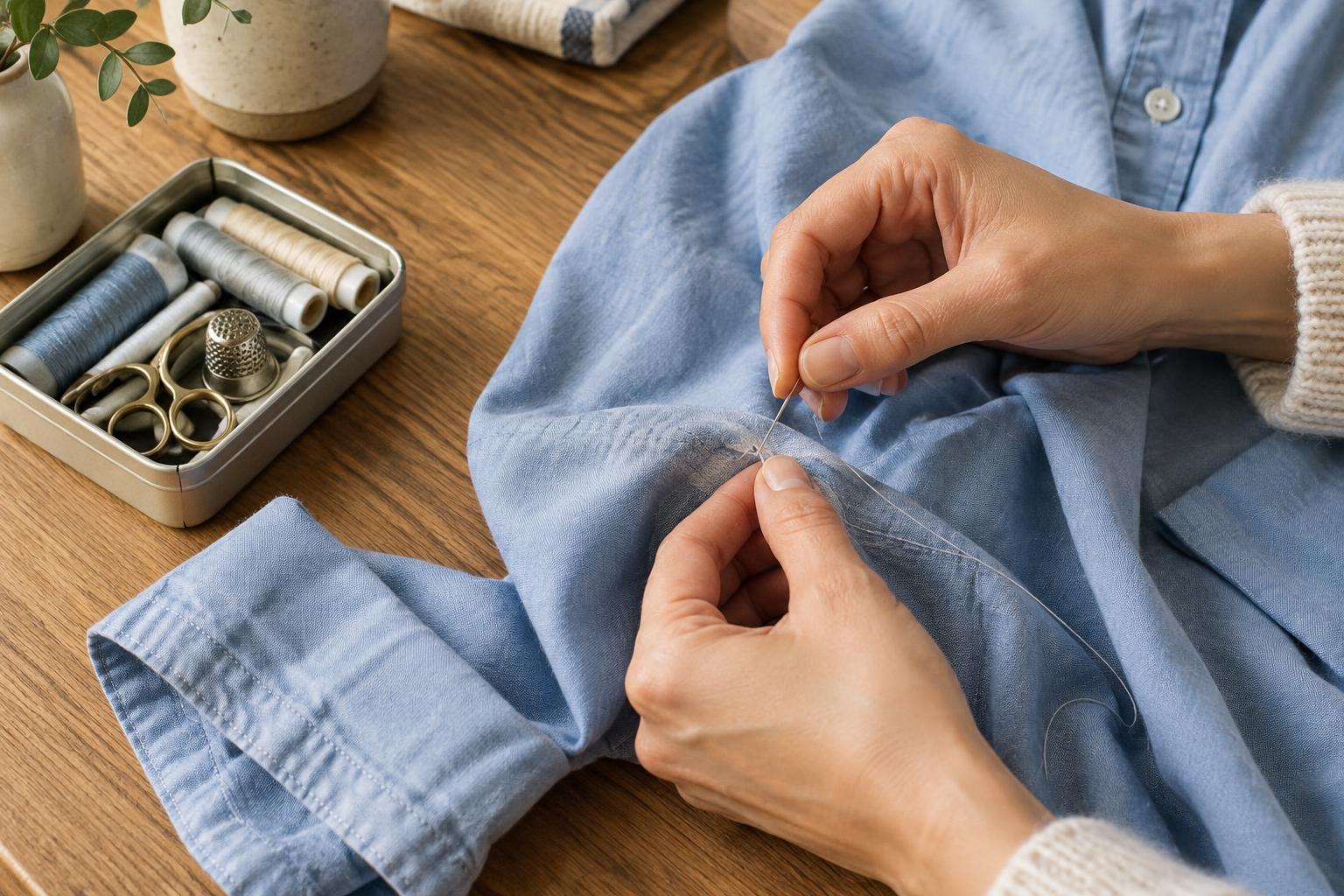
Start with the fabric, not the needle
Small repairs are easier when you first work out what has failed. Turn the garment inside out and look closely: has the stitching come undone while the fabric remains intact, or has the fabric itself torn? An open seam usually needs new stitches along its original line. A hole in the fabric needs support or careful closing, and a dropped hem needs to be folded back into place. If the surrounding cloth is thin or fraying, simply pulling the edges together may put more strain on it.
A basic kit can be modest: hand-sewing needles, thread, small scissors, pins or clips, and a ruler. Choose thread close to the garment’s color and similar in weight to the original stitching. Test a needle on an inconspicuous area if the fabric is delicate. Good light helps you see the existing stitch line, while pressing the area gently, when the care label allows it, can make folds easier to follow. Keep the garment relaxed as you work; stitches sewn into stretched fabric may pucker when it returns to shape.
Close a loose seam securely
If the fabric is sound, trim only the loose thread ends that might tangle. Align the original seam edges and pin or clip them together. Thread a needle, knot the end, and begin a short distance before the opening so the new stitches overlap the old ones. A backstitch is a useful choice: bring the needle up through both layers, take a small stitch backward along the seam line, then bring it up a little farther forward. Repeat across the gap and overlap the intact seam at the other end.
Aim for even stitches without pulling them tight enough to gather the cloth. Finish with a few small securing stitches on the inside and trim the thread. For a seam whose raw edges are fraying, a simple line of stitching may not last; the area may need reinforcement or a wider seam allowance. If the garment is lined, highly stretchy or under a lot of tension, consider whether a sewing machine or a repair professional would give a neater, stronger result.
Put a fallen hem back in place
A partly fallen hem often leaves a clear fold to follow. Turn the garment inside out, smooth the fabric, and compare the loose section with the intact hem nearby. Fold the edge to match, then pin it without twisting the fabric. If the fold is no longer visible, measure from the garment’s lower edge at several points rather than guessing from one spot.
For a discreet hand-sewn hem, anchor the thread inside the folded allowance. Take a tiny bite of the garment’s outer layer, then pass the needle through a short section of the fold. Continue with stitches spaced similarly to those on the original hem. Catch only a few outer fibers each time to limit visible marks, and check the right side as you go. Hem tape can be convenient for some fabrics, but it may feel stiff or react poorly to heat or laundering. Check the care label and test any adhesive or ironing method on a hidden area first.
Treat small holes according to their edges
A tiny hole in a knit, such as a T-shirt or sweater, may have loops that can be drawn back together. Work from the inside with small stitches, catching sound fabric around the opening rather than yanking the edges tight. A fine thread in a matching color helps the mend blend in. If you can see a loose yarn loop, avoid cutting it until you know how it connects to the surrounding stitches; snipping it may let the hole grow.
Woven fabric behaves differently. If its threads have worn away, closing the gap edge to edge can distort the cloth. A small patch placed behind the hole can support the weak area; stitch around the damaged section, taking care not to stretch it. You can choose a close color for a quiet repair or a contrasting patch for an intentional detail. Either way, soften any bulky corners and check that the finished mend will not rub against your skin.
Check the repair before wearing it
Turn the garment right side out and gently move the repaired area as it would move when worn. Look for puckering, missed sections or stitches that feel too tight. A repair across a high-stress spot, such as an underarm seam, may need extra reinforcement. Wash and dry the piece according to its care label, then inspect it again before putting it back into regular rotation.
Not every mend needs to disappear. A tidy visible stitch or patch can become part of a garment’s character, especially when a perfect color match is difficult. The useful goal is a repair that holds, feels comfortable and suits how you want to wear the piece.