Start with layers you can adjust
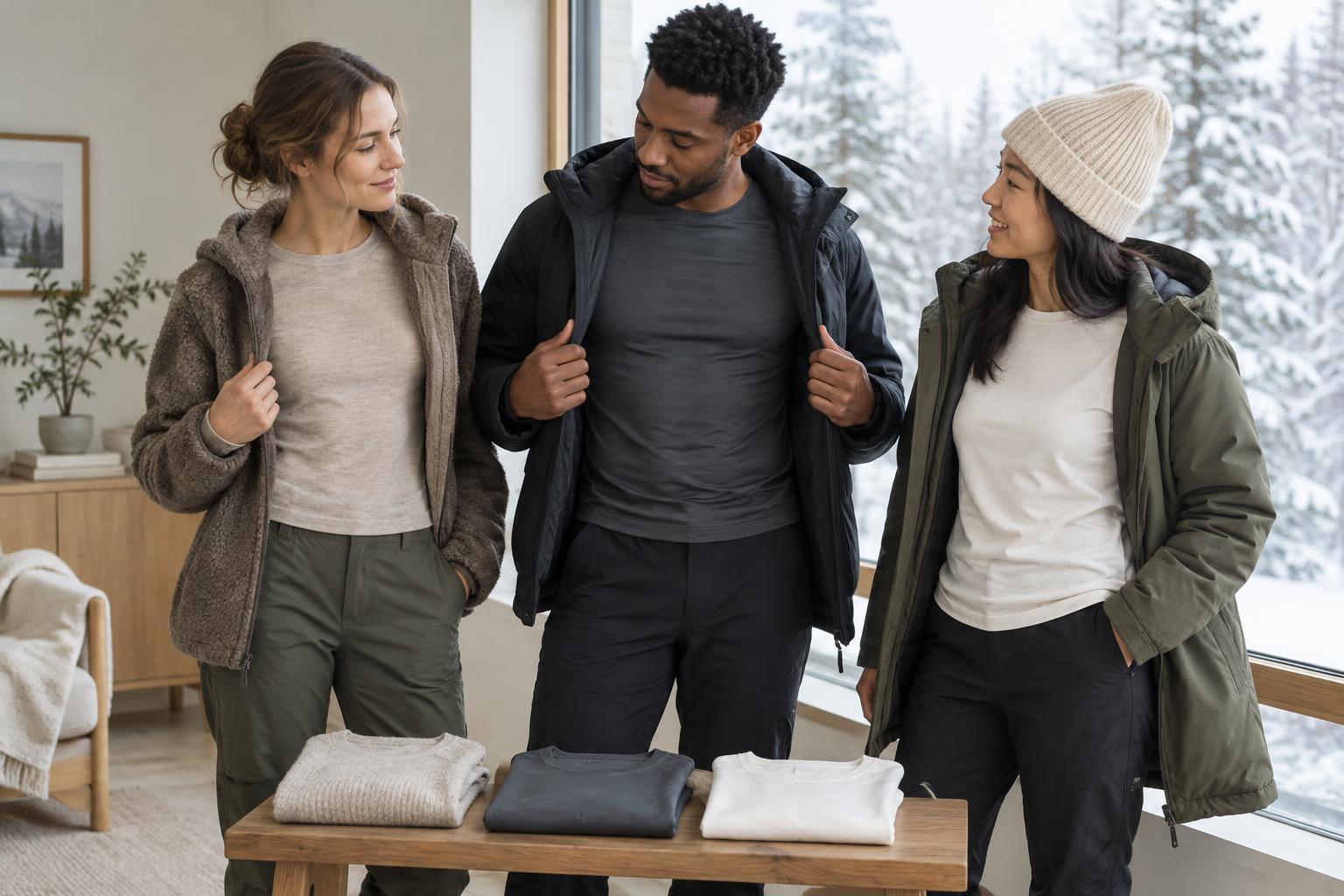
A useful winter wardrobe begins with layers rather than one exceptionally thick garment. Layering lets you adapt as you move between cold streets, heated rooms and different levels of activity. Aim for a close-fitting base layer, a warm middle layer and an outer layer that helps block wind or precipitation. Each piece should fit comfortably over the one beneath it without restricting your shoulders or arms.
For the base layer, look for a long-sleeved top and, on especially cold days, leggings or tights under trousers. Wool blends and many synthetic fabrics are useful choices because they can feel more comfortable than damp cotton when you work up a sweat. A fine knit, fleece or cardigan makes a flexible middle layer. Choose one that you can remove easily indoors, and check that its hem and sleeves stay in place beneath your coat.
Choose outerwear for your actual weather
A winter coat is often the most visible part of an outfit, but its practical details matter just as much as its shape. A longer hem offers more coverage, while a shorter jacket may be easier to move in. Look for a closure you can fasten fully, cuffs that limit drafts and enough room for your usual layers. A hood can be useful when wind or snow makes an umbrella awkward.
Insulation, wind protection and water resistance serve different purposes. A plush coat may feel warm on a calm, dry day yet be less comfortable in wet or windy conditions. If your winters include a mix of freezing rain and snow, consider a weather-resistant outer layer with warm pieces underneath. Before buying, try the coat while wearing a sweater: you should be able to reach forward and sit down without the fabric pulling tightly.
Protect the areas that get cold first
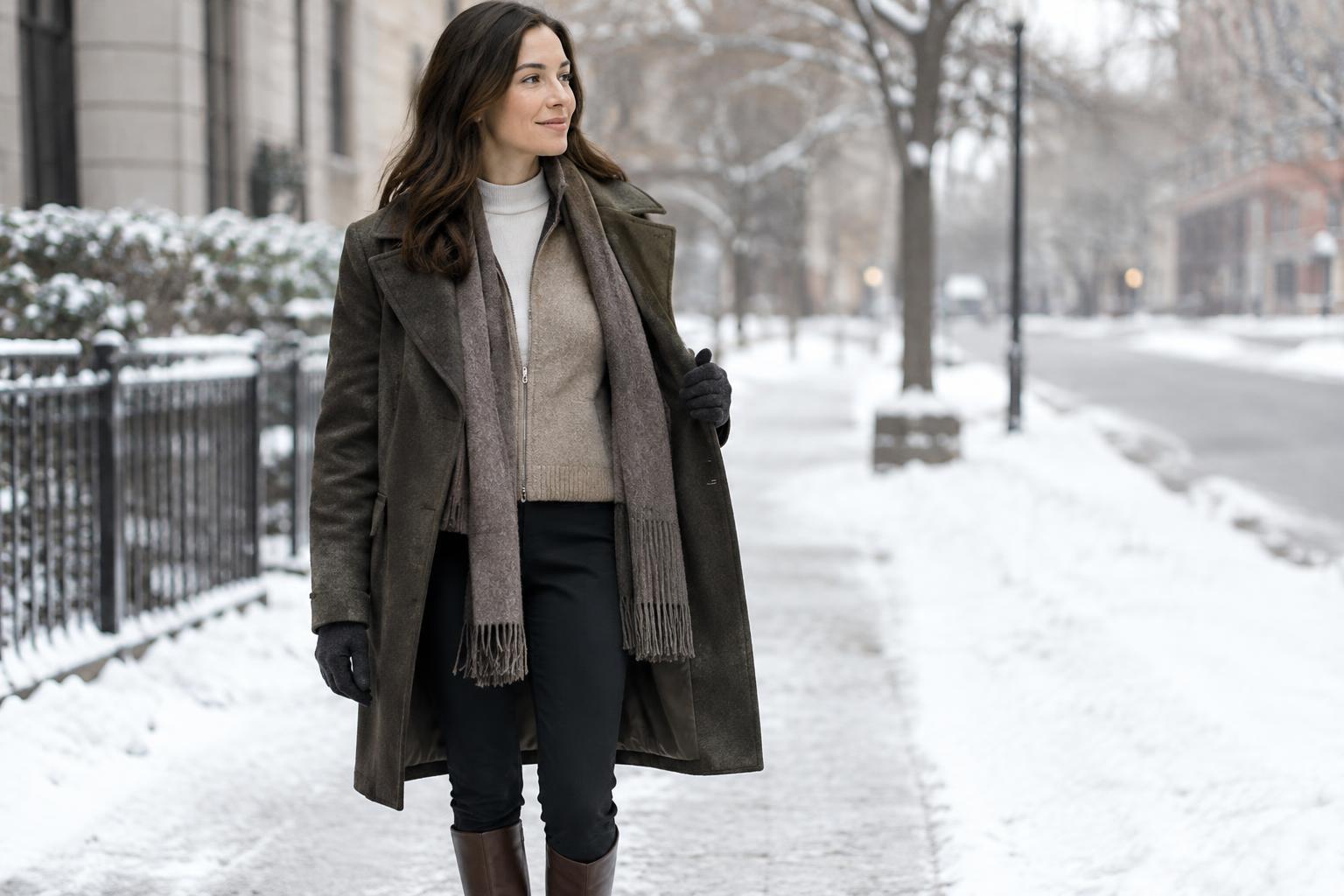
Hats, gloves and scarves are small additions that can make a winter outfit feel more complete and comfortable. A hat that covers your ears and a scarf or neck warmer that sits neatly inside your coat help close gaps where cold air enters. If you frequently use your hands outdoors, choose gloves that let you grip what you carry; mittens may feel warmer when you do not need as much finger movement.
Footwear deserves the same attention. Boots should have space for comfortable socks without squeezing your toes, along with soles suited to the surfaces you regularly walk on. For slush or snow, prioritize footwear that helps keep water out and can be wiped clean. Thick socks are not always better if they make boots tight. A medium-weight pair in a suitable boot may be more comfortable than doubling up.
Build outfits around your daily routine
For a commute that involves time outside and a warm workplace, try a base layer, a removable cardigan, straight-leg trousers, insulated boots and a longer coat. Keep a pair of indoor shoes at your destination if boots feel too heavy for the day. For a casual outing, a thermal top under a sweater, lined trousers and a practical jacket can work well with a beanie and a scarf in a color you enjoy.
You do not need an entirely separate wardrobe for the coldest weeks. Start with clothing you already wear, then identify where you feel exposed: perhaps your coat lets wind through, your trousers need an underlayer or your footwear gets wet. Fill those gaps first. A small palette of coordinating colors can make repeat pieces feel intentional, while a patterned scarf, bright hat or textured knit gives familiar combinations a different look.
Keep winter pieces ready to wear
Winter clothing works best when it is clean, dry and easy to find. Let damp coats, gloves and boots dry thoroughly before storing them in a closed space. Brush off loose dirt from footwear and follow its care label or material guidance before using cleaners or protective treatments. For knitwear, check the label before washing and avoid hanging heavy sweaters if they tend to stretch.
At the start of the season, try on key pieces together rather than checking each item alone. Make sure your boots still fit with winter socks, your gloves allow you to use your hands and your coat closes over your warmest sweater. Repairing a loose button or replacing worn socks early can keep a dependable outfit in rotation. The goal is not a large collection: it is a set of comfortable pieces you can combine and adjust when temperatures drop.