Start with a color you already wear
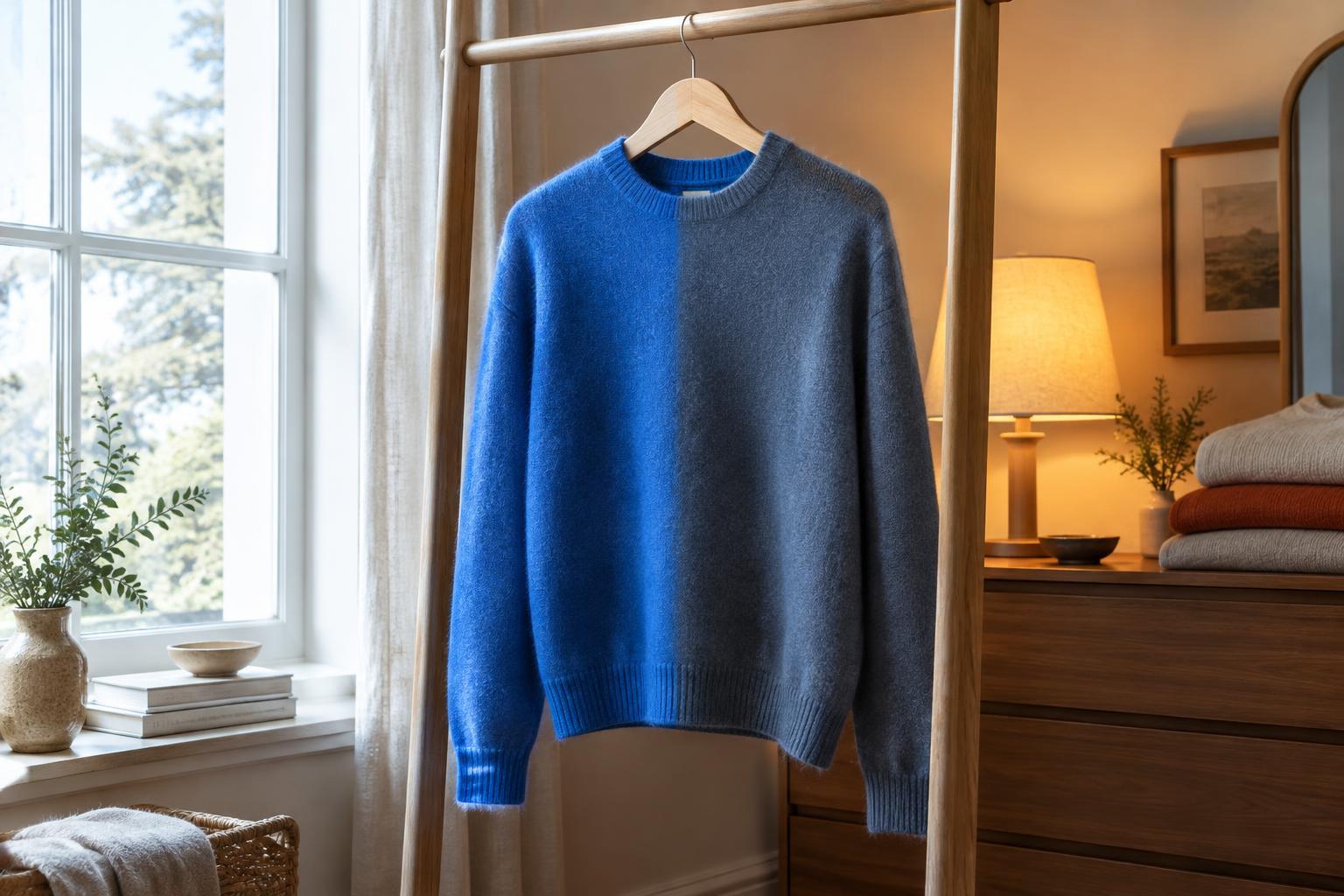
A monochromatic outfit is built around one color family, not necessarily one exact shade. A navy sweater can sit comfortably with dark-blue jeans and a softer blue shirt; cream trousers can work with an ivory top and a warm beige jacket. Thinking in color families makes the idea easier to try with clothes you already own, rather than sending you in search of a perfectly matched set.
Choose a color you enjoy wearing near your face or one that appears often in your wardrobe. Neutrals such as brown, gray and black are easy starting points, but olive, burgundy and blue can be just as wearable. Lay a few pieces together in daylight before getting dressed. This makes it easier to see whether their undertones feel harmonious or whether one item stands apart more than you intended.
Use shade and texture to create depth
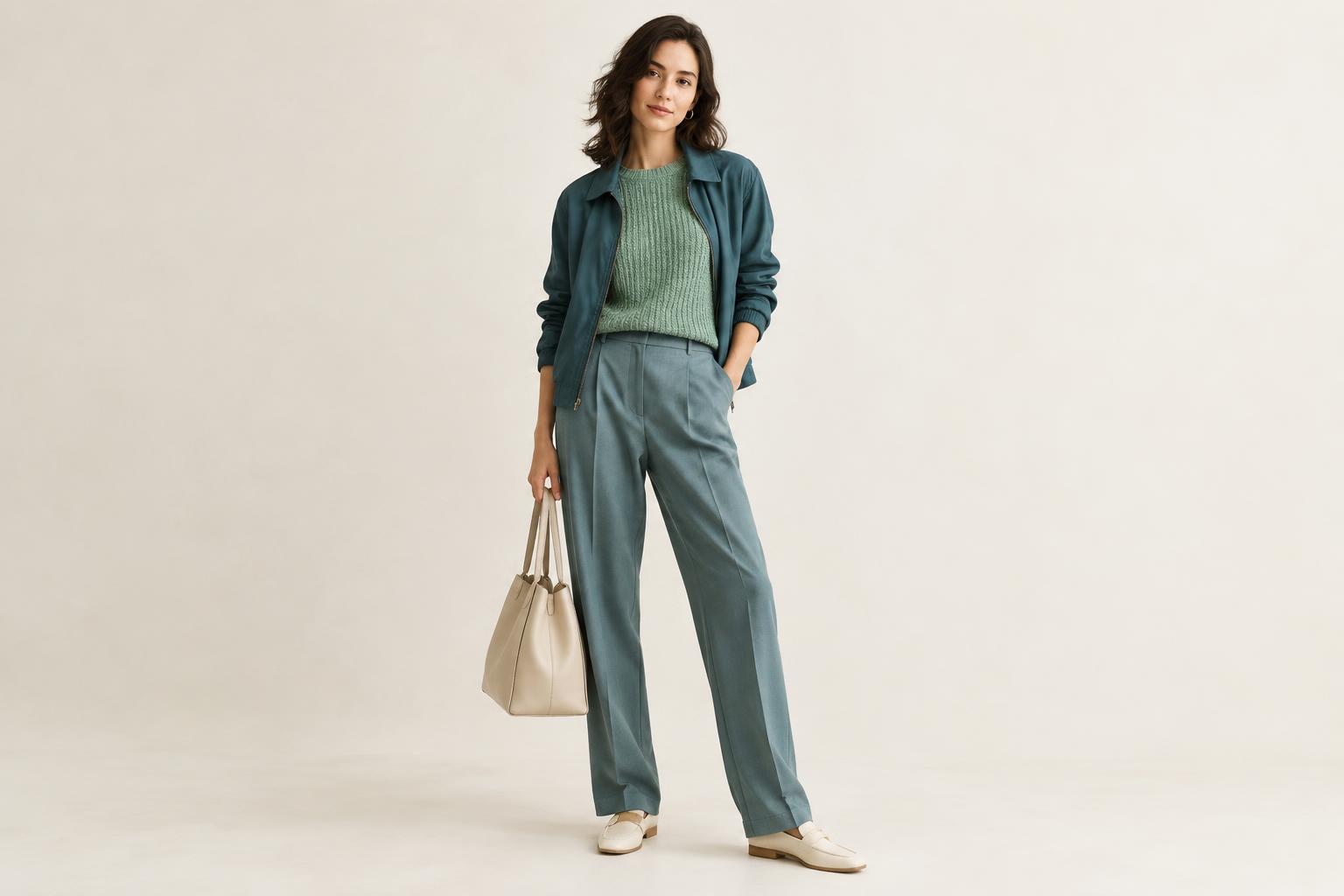
When every piece has the same color and a similar finish, an outfit can look flat. Try combining a light, medium and dark version of your chosen color. For example, charcoal trousers, a mid-gray knit and a pale gray coat create visible layers while still reading as one cohesive look. You can also keep the main pieces close in shade and let a lighter collar or darker belt provide the contrast.
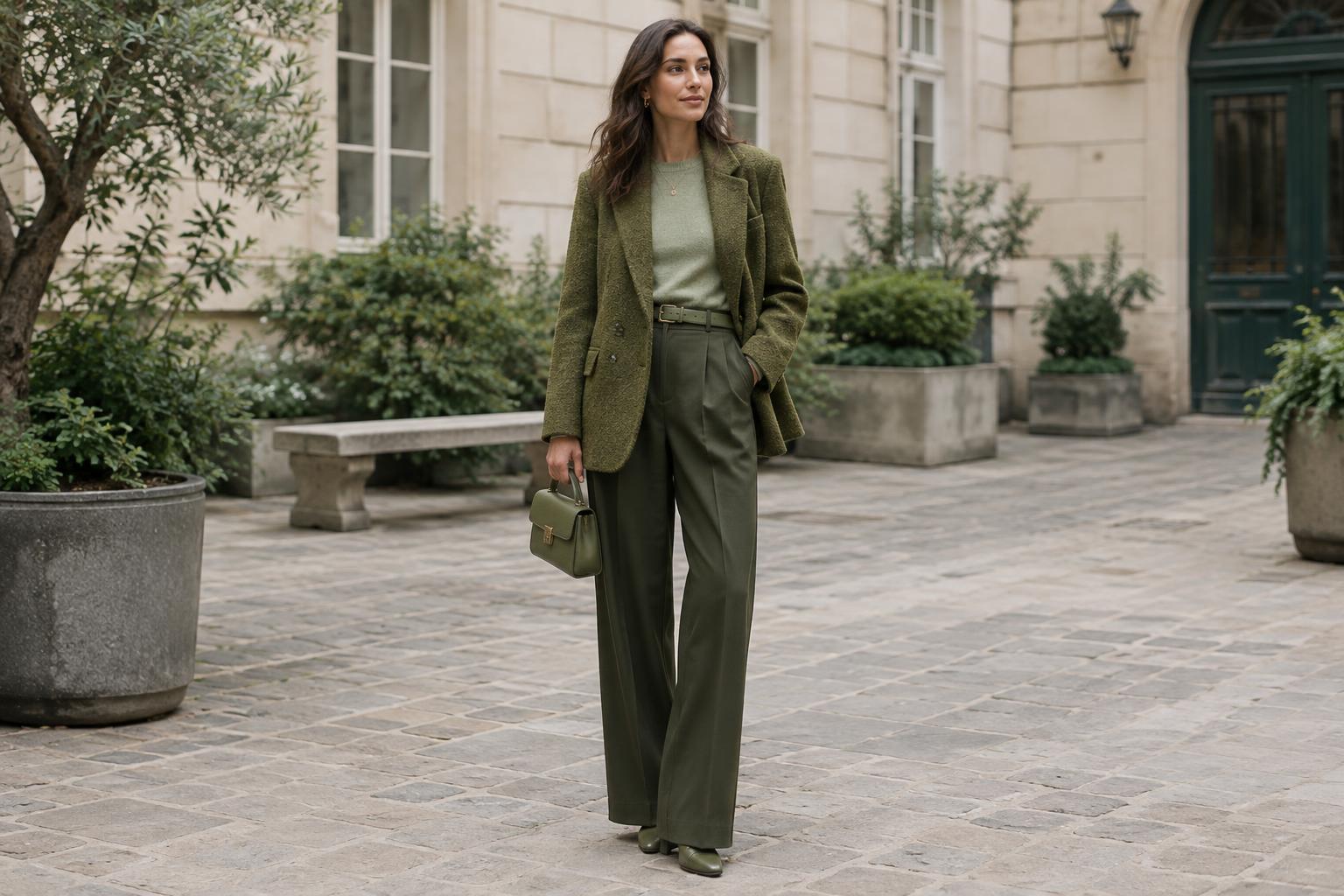
Texture does some of the work that contrasting colors usually do. A ribbed knit next to smooth cotton, denim beside a soft fleece, or a matte jacket over a subtly lustrous top gives the eye something to notice. You do not need several statement fabrics: one textured piece is often enough. If you are shopping for a missing layer, consider how its surface looks alongside your existing clothes, not just whether its color name matches.
Give the silhouette a clear shape
Proportion helps a single-color outfit feel deliberate. Pair a roomy shirt with straighter or narrower trousers, or wear wide-leg trousers with a more fitted top. A cropped jacket can define the waist over a longer base layer, while an open overshirt creates a vertical line. None of these combinations is a rule; the aim is simply to make the relationship between the pieces visible.
Pay attention to where layers end. If a top, cardigan and jacket all finish at nearly the same point, their outlines may blur together. Tucking in a shirt, rolling a sleeve or choosing a shorter outer layer can reveal the structure of the outfit. These small adjustments cost nothing and are useful when a look seems right on the hanger but unfinished once worn.
Let accessories support the color story
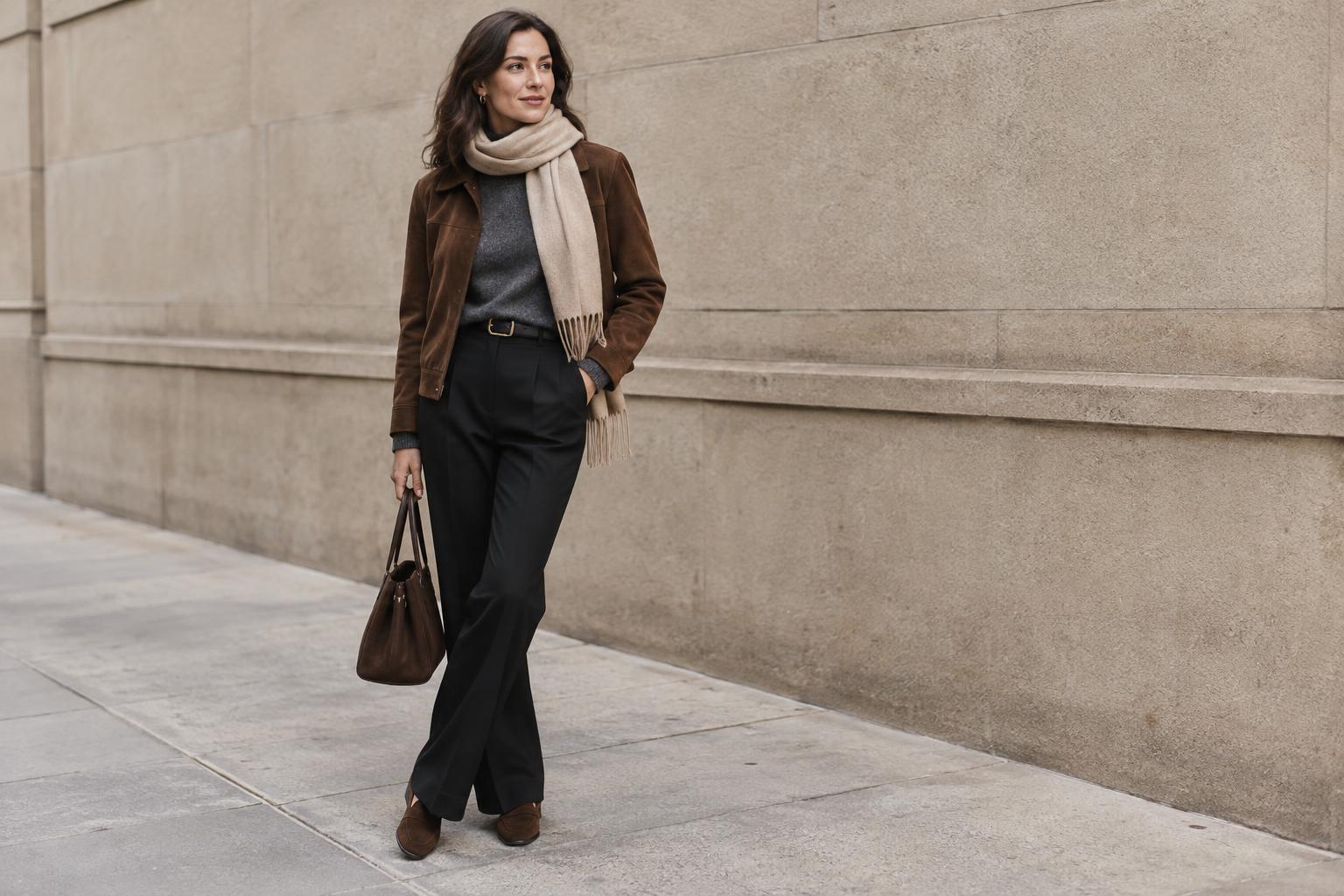
Shoes and bags do not have to match your clothes exactly. Repeating the same color family in a different shade keeps the outfit connected: think dark-brown boots with camel clothing or deep-green sneakers with an olive ensemble. A contrasting accessory can also work when it has a clear purpose, such as a white shoe that lifts an otherwise dark outfit.
Metal hardware, a watch strap, a scarf or a visible sock can provide a small point of contrast without taking over. If you like patterns, choose one that contains your main color, such as a subtle stripe or check. The outfit will still feel monochromatic overall, but the pattern can break up a large block of solid fabric. Step back and look at the whole outfit before adding more; one distinct accent may be plenty.
Check the details, then make it yours
An intentional look is often about finishing rather than buying. Clean shoes, a sweater free of visible lint and trousers that fall the way you want them to can make familiar pieces feel more considered. Dark colors may show dust or fading, while pale colors can reveal marks, so give your outfit a quick check in natural light when possible. Adjusting a cuff or switching a layer may be all it needs.
Finally, dress for your actual day. A tonal suit and a T-shirt, a knit with jeans, or relaxed separates in related shades can all express the same idea at different levels of formality. Start with two or three pieces, notice what feels comfortable, and refine from there. Monochromatic dressing works best when the color ties the outfit together but the choices still feel like yours.