Start with the stripe, not the rule
Stripes are often discussed as though one direction suits everyone and another should be avoided. In practice, the effect of a striped garment depends on much more than direction. Stripe width, color contrast, spacing, fabric, fit and where the pattern sits all influence how it looks. More importantly, the piece should feel like something you want to wear. Treat visual guidelines as options to test, not rules you have to follow.
Before choosing a striped item, decide what job you want it to do. A subtle shirt might add texture to work outfits, while a bold knit could be the main feature of a weekend look. Try it on with clothes you already own and view the whole outfit, including shoes and layers. A stripe that seems busy on a hanger may feel balanced once it has some visual space around it.
Thin and wide stripes set different moods
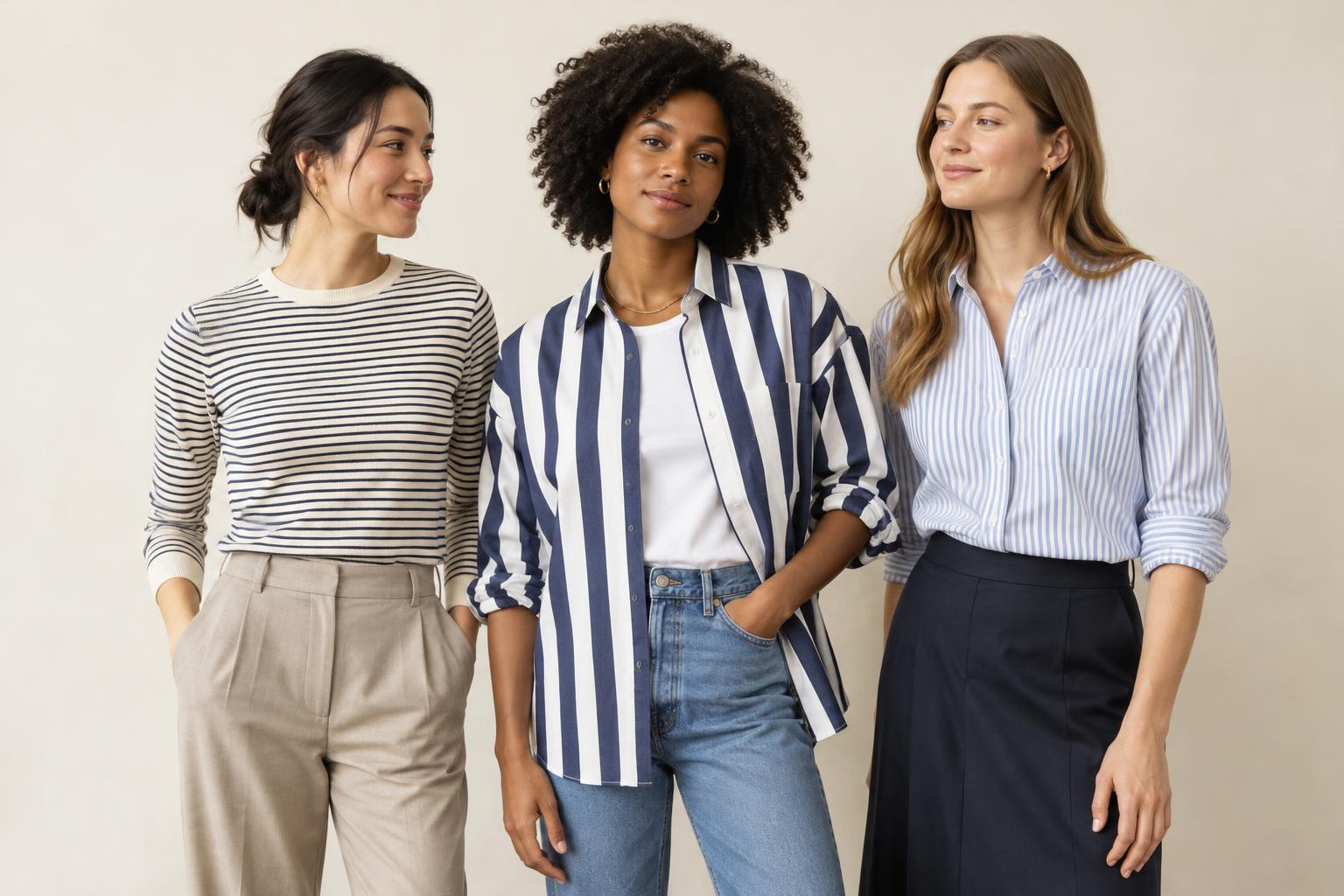
Thin stripes tend to read as a fine pattern from a distance, especially when the colors are close in tone. They can be an easy starting point if you usually wear solid colors. A narrow-striped button-up, for example, can sit comfortably with plain trousers, denim or a simple skirt. Look closely at spacing: tightly packed lines can create a different impression from widely spaced ones, even when both are technically thin.
Wide stripes make a stronger statement because each band of color takes up more room. A wide-striped sweater can anchor an outfit of otherwise simple pieces; a wide-striped trouser may work best when the top picks up one of its colors. Neither option requires an all-neutral wardrobe. If you enjoy color, choose a stripe containing a shade you already wear and repeat it elsewhere in a small way, such as in a bag or pair of socks.
Vertical and horizontal stripes in real outfits
Vertical stripes lead the eye along the length of a garment, but the overall effect changes with the cut. A relaxed vertical-striped shirt worn open over a plain tee looks different from a fitted one tucked into trousers. On wide-leg pants, long stripes can emphasize the movement of the fabric. If the lines bend or pull where the garment feels tight, that may be a fit issue rather than a reason to reject the pattern.
Horizontal stripes can create a clear, rhythmic look across a top, dress or knit. Their placement matters: a stripe across the chest, a striped sleeve and an evenly striped full-length dress each create a different focal point. Try varying the proportions of the outfit rather than worrying about whether horizontal lines are universally flattering. A striped tee under an open jacket, for instance, lets you show as much or as little pattern as you like.
Use contrast and scale to build an outfit
Black-and-white stripes offer crisp contrast, while navy and cream, brown and tan, or two neighboring shades can feel softer. High contrast usually draws more attention to the pattern; low contrast can make stripes easier to layer. The same principle applies to scale. Pairing a bold stripe with a solid item gives it room to stand out, while pairing two patterns invites a busier, more expressive look.
To mix stripes with another pattern, begin with one shared color. A striped shirt and a small checked scarf, for example, can feel connected when both include the same blue. Varying scale also helps distinguish the pieces: try a broad stripe with a small print instead of two equally prominent patterns. There is no need for a perfect match. Step back from the mirror and decide whether the combination feels lively in a way you enjoy.
Choose for repeat wear and easy care
When shopping, consider the garment as well as the pattern. Check whether stripes line up at seams if that detail matters to you, and notice how the fabric hangs when you move. A soft drape may make a stripe look fluid; a structured fabric may give it a sharper edge. For a versatile first purchase, a striped layer in colors already present in your wardrobe may offer more outfit possibilities than a striking piece you cannot easily pair.
Follow the care label to help keep the piece looking its best. Washing a striped garment with similar colors is a sensible precaution, particularly when it is new or has strong light-and-dark contrast. Store knits in a way that suits their weight so they keep their shape. Above all, wear stripes in the direction and scale that appeal to you: the most useful pattern is one that earns its place in your regular rotation.