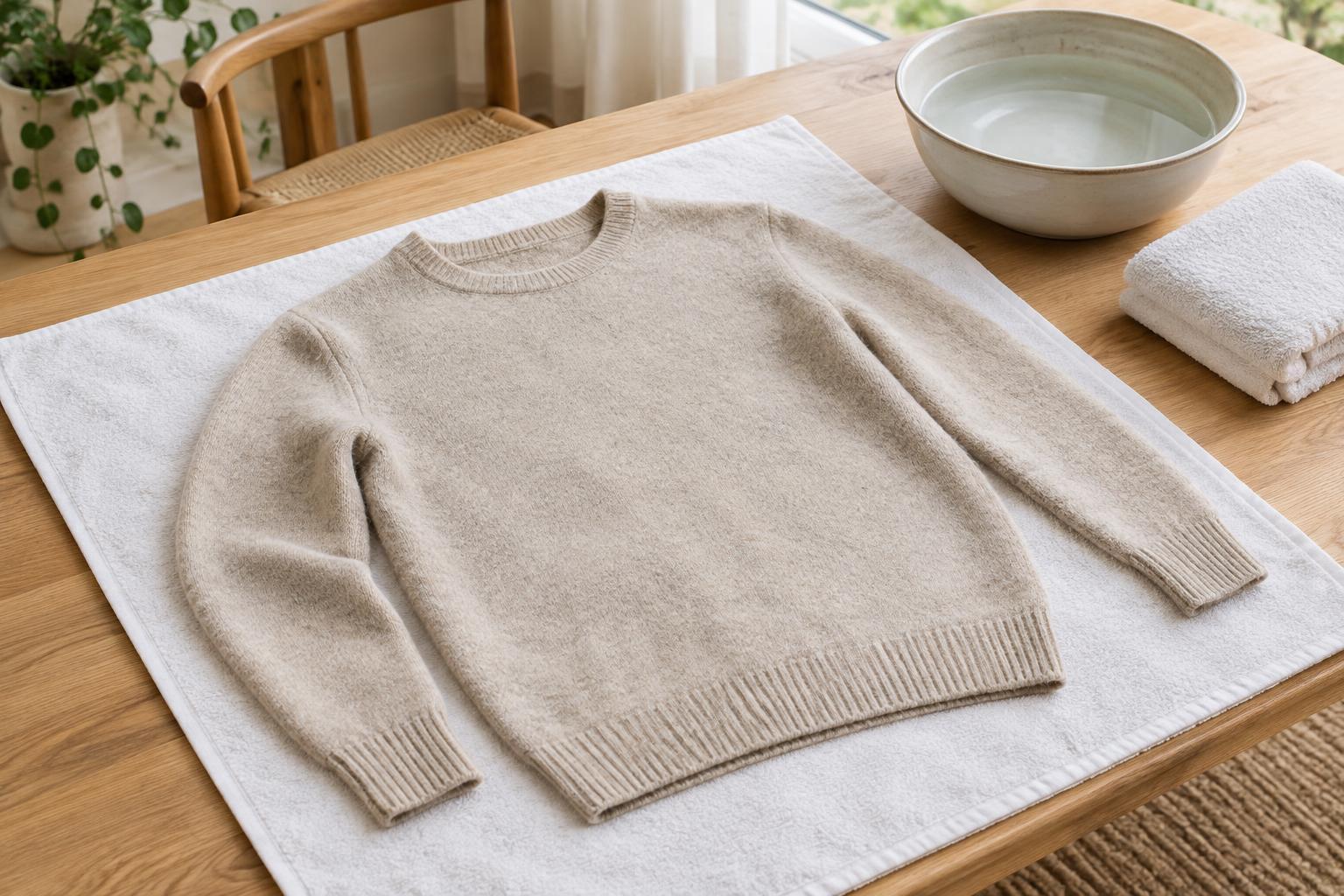
Start with the care label and the sweater itself
Before filling a basin, read the care label. “Wool” describes a fiber, not a single set of washing instructions: a sweater may also contain silk, cotton or synthetic fibers, and its knit or trim may need special handling. If the label says dry clean only, follow it. If it allows hand washing or a wool machine cycle, those are your starting options. When the label is missing and the sweater is valuable or delicate, a professional cleaner is the lower-risk choice.
Take a moment to inspect the sweater. Close any buttons or zippers that might catch, and check for loose threads or damaged seams before washing. If only a small area needs attention, you may not need to wash the whole garment. Gently blot a fresh mark with a clean cloth and follow the label’s stain-care guidance. Test any cleaning product on an inconspicuous area first, especially on a strongly colored sweater.
Choose a gentle wash, not a vigorous scrub
For a sweater labeled hand washable, fill a clean basin with cool or lukewarm water, following any temperature guidance on the label. Add a small amount of detergent intended for wool or other delicates, using its directions rather than guessing at a generous dose. Submerge the sweater and move it gently through the water. Avoid rubbing the knit against itself, twisting it or leaving it to soak for an extended period.
Drain the basin and rinse gently in water of a similar temperature until the detergent is removed. A sudden change in temperature, combined with vigorous movement, can be hard on some wool knits. Lift the sweater with both hands so the wet fabric does not hang and stretch under its own weight. Press out water lightly; do not wring it.
If the label permits machine washing, use the specified wool or delicate cycle and an appropriate detergent. A mesh laundry bag can help keep the sweater from catching on other items. Wash it with a small load of similarly gentle garments, rather than alongside heavy jeans or towels. A machine-washable label is not an invitation to use a regular, high-agitation cycle.
Remove water without pulling the knit out of shape
The first stage of drying matters as much as washing. Spread a clean, dry towel on a flat surface and lay the sweater on it. Smooth the body and sleeves into their usual position, then roll the towel and sweater together. Press along the roll to transfer water into the towel. If the sweater is still very wet, repeat with a second dry towel.
Do not hang a wet wool sweater from its shoulders or drape it over a narrow rail. The weight of the water can pull the knit downward, leaving long sleeves, a stretched hem or bumps at the shoulders. Resist the temptation to wring out the last bit of water; towel pressing is slower, but it treats the fabric more gently.
Dry flat and reshape while damp
Move the sweater to a dry towel or a flat drying rack with enough support beneath the whole garment. Arrange the shoulder seams, neckline, cuffs and hem as you want them to dry. If you know the sweater’s usual dimensions, use them as a guide rather than stretching the fabric until it looks perfectly smooth. Pat and nudge the knit into place; do not pull hard on a sleeve or the body.
Let it air-dry away from direct heat, such as a radiator, and avoid a tumble dryer unless the care label specifically allows one. Turn the sweater over when the top feels mostly dry, and replace a damp towel if needed. Drying time varies with the thickness of the knit and the air in the room. Wait until the cuffs, seams and underarms feel fully dry before wearing or storing it.
Keep its shape between washes
Washing less often can reduce wear on a sweater that is otherwise clean. Air it out after wearing, and wash when it needs more than airing or a careful spot clean. Follow the label’s instructions even if a previous wash went well; repeated rough handling can gradually change how a knit looks and feels.
Once the sweater is completely dry, fold it for storage instead of leaving it on a hanger for long periods. A shelf or drawer gives the shoulders and body even support. Before putting it away for a season, make sure it is clean and dry. These small habits help preserve the fit you worked to protect during washing.