Start with the conditions underfoot
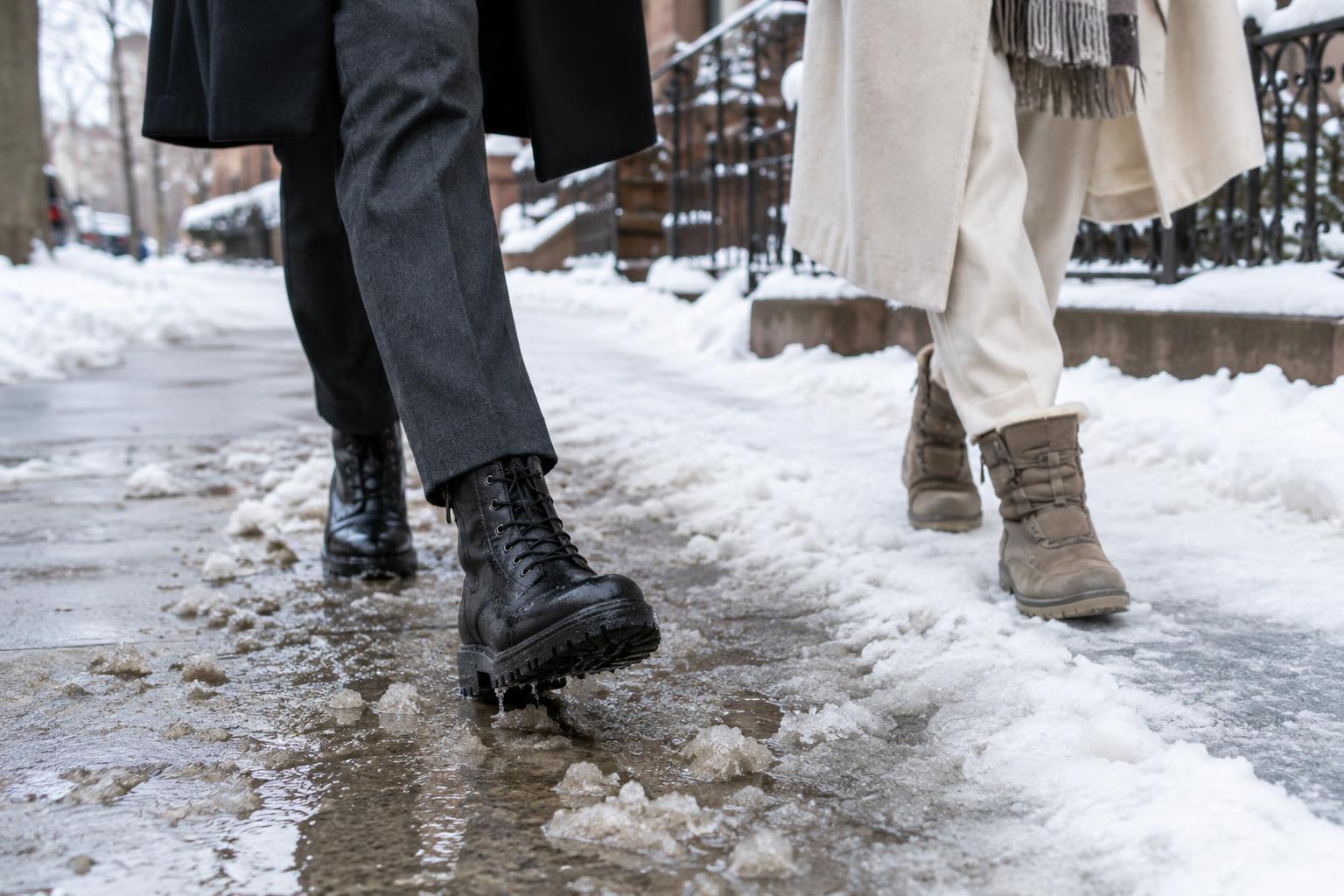
The best winter shoe depends on what you actually walk through. Packed snow calls for a sole with enough tread to grip uneven ground. Slush puts water protection higher on the list, especially if puddles form at crossings. Icy sidewalks are the hardest test: a warm, waterproof boot may still slide on smooth ice. Think about your usual route, not just the forecast. A short trip from a car to an office may call for a different pair than a long walk to public transport.
If conditions vary during the day, prioritize the most difficult part of your journey. An ankle boot that handles a light dusting of snow may be comfortable indoors but leave you with wet socks after a slushy walk home. You do not need one pair for every winter day. Depending on your climate and routine, a versatile weather-ready boot plus a lighter indoor option may be more useful than several pairs that all serve the same purpose.
Look closely at soles and traction
Turn a prospective boot over before judging its appearance. A sole with defined tread and spaces between the grooves can offer a firmer foothold in snow than a smooth fashion sole. Flexible rubber is often more useful for winter walking than a hard, slick sole, though grip varies by design and surface. Deep tread alone does not guarantee traction on ice, and no ordinary shoe makes every icy pavement safe.
For frequent icy walks, consider removable traction aids designed for footwear. Check that they fit securely over your boots and follow the maker’s guidance about where to use them. Some are intended for outdoor ice rather than smooth indoor floors, so plan where you will take them off. Whatever you wear, slow down on ice, take shorter steps and use a cleared route when one is available. Footwear helps, but it cannot replace careful movement.
Balance water protection, warmth and fit
For slush, look beyond a product’s general winter label. Water-resistant uppers can be useful for brief exposure, while waterproof construction is a better starting point for repeated contact with wet snow. Seams, tongues and the height of the upper matter too: water can enter above an otherwise protective lower section. A taller boot may help when snow is deeper, but it can feel cumbersome if your route is mostly cleared pavement.
Warmth comes from the whole setup, including socks and room for your feet to move. Try boots with the socks you expect to wear, rather than assuming you can add a thick pair later. Your toes should have space without your heel slipping excessively. Tight boots may feel less comfortable in the cold, while an oversized pair can make walking less stable. If you use insoles, check the fit with those in place before committing to a pair.
Make winter footwear work with your wardrobe
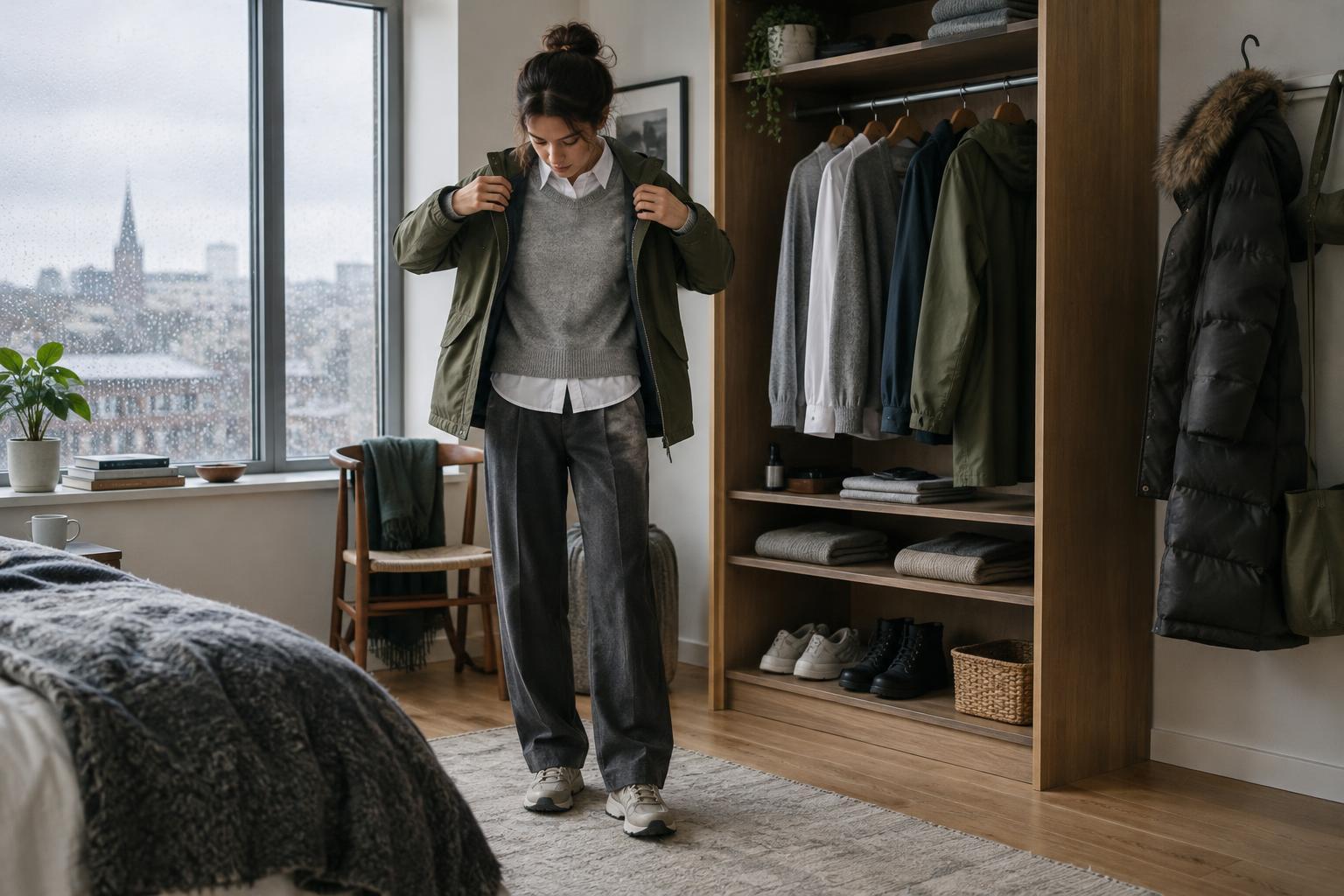
Practical boots can still feel like part of an outfit. A streamlined dark boot works easily with straight-leg trousers, a long coat and a scarf in a contrasting color. With wider trousers, try a pair with enough structure at the ankle to keep hems from falling into slush. Cropped trousers or a neatly cuffed hem can show off the boot and keep fabric farther from wet ground. On snowy days, leggings or close-fitting trousers are easy to tuck into a taller shaft.
If you prefer a softer palette, consider shades such as brown, charcoal or olive rather than choosing black by default. Visible stitching, a textured upper or colored laces can add personality without sacrificing a useful sole. For days that move between messy streets and a dry workplace, carrying a lighter pair of shoes can give you more outfit options. Choose the outdoor pair for the walk first; build the rest of the look around it.
Care for the pair you choose
Snow and slush can leave moisture, grit and de-icing residue on footwear. Brush off loose dirt, then clean the upper using a method suited to its material. Leather, suede, textiles and rubber may need different products, so check the care instructions before applying a cleaner or protective treatment. Pay attention to the edges where the upper meets the sole, since buildup there is easy to miss.
After a wet outing, remove any detachable insoles and let the boots dry at room temperature. Stuffing them lightly with paper can help absorb moisture and support their shape; replace the paper if it becomes damp. Avoid placing footwear directly against a strong heat source, which may damage some materials or adhesives. Before the next outing, check the tread for packed debris and the uppers for wear. A little maintenance makes it easier to tell when a pair is ready for another winter walk.