Dress for two environments
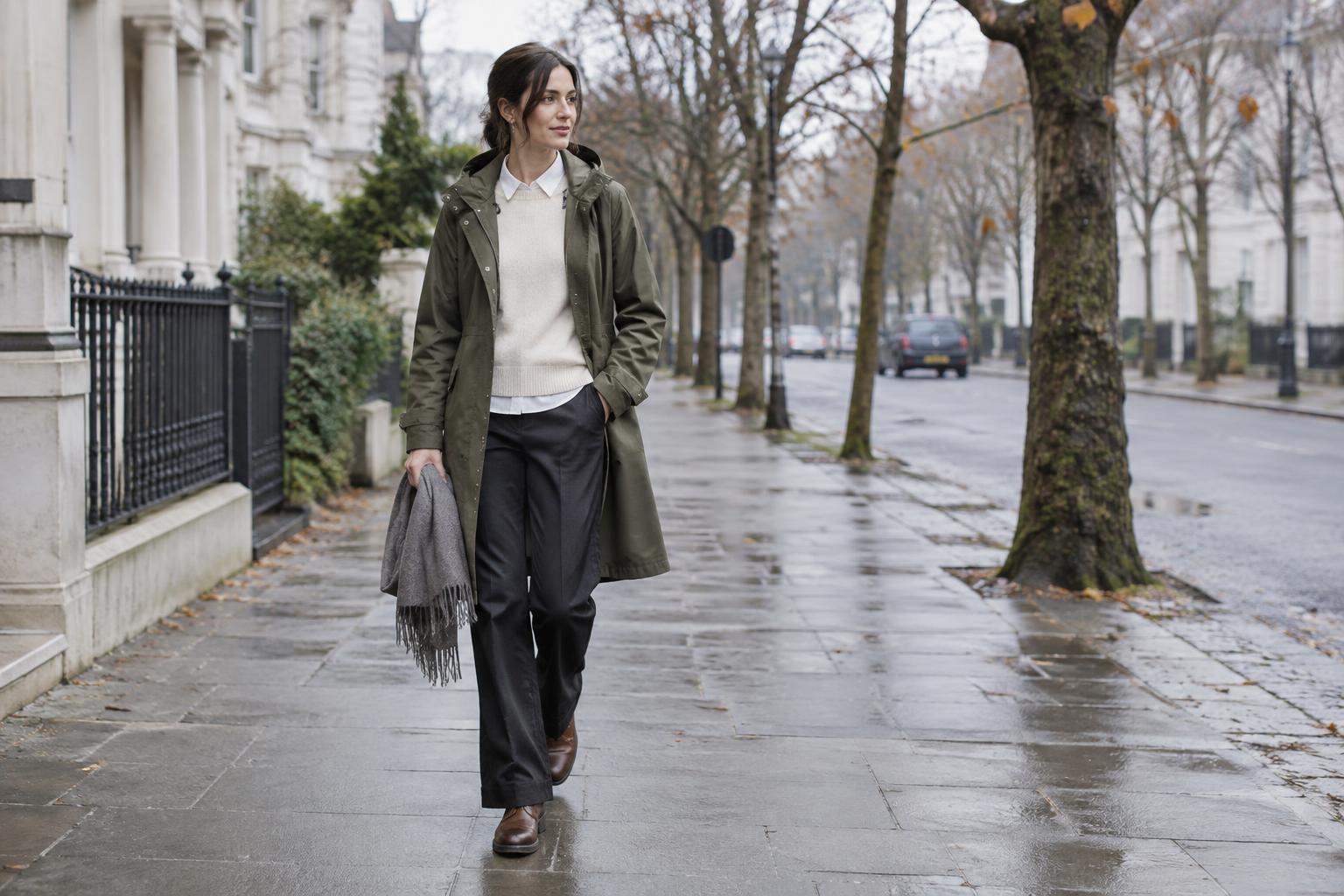
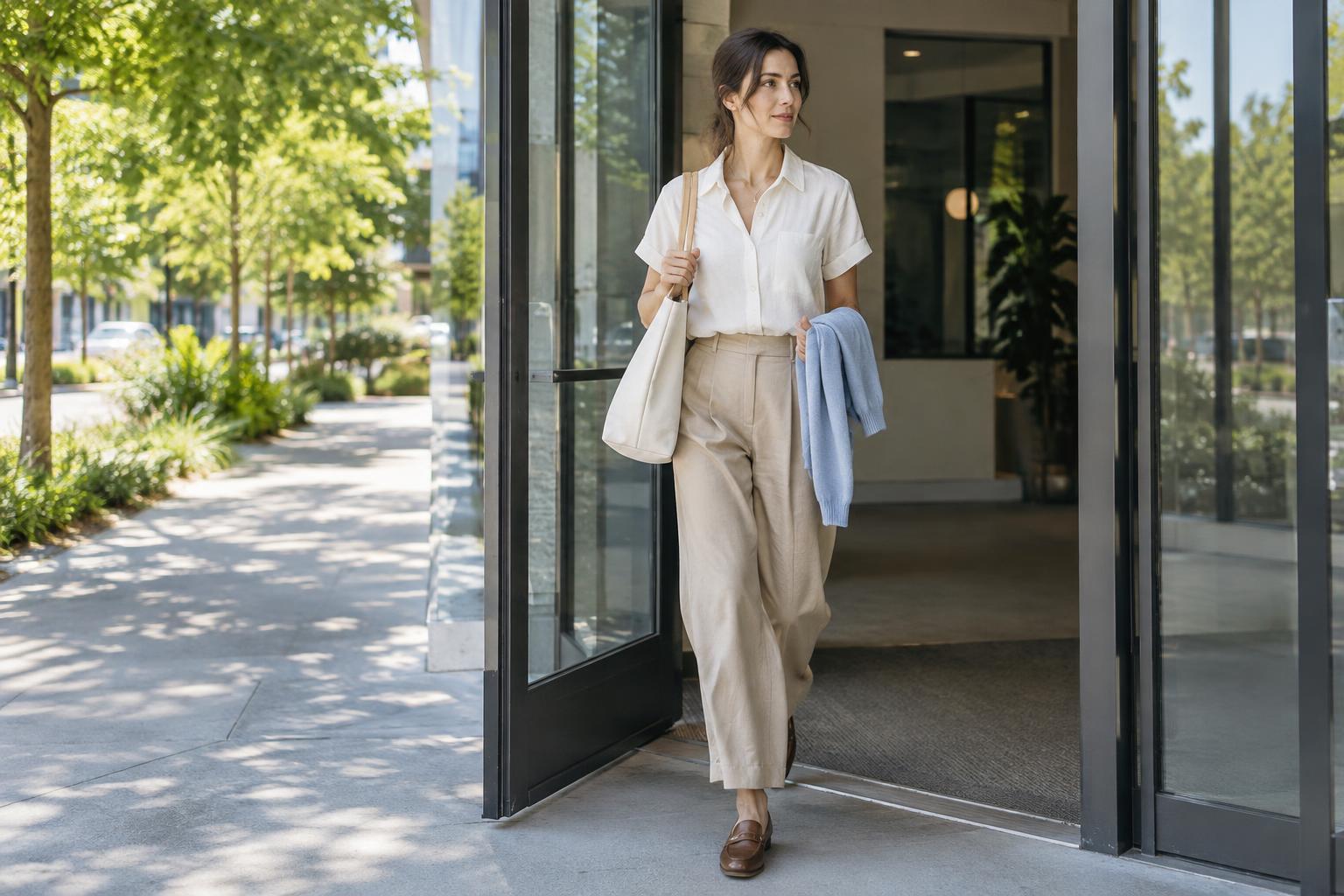
A rainy day can mean a cool walk, a crowded commute and a warm room, all before lunch. Dressing only for the weather outside may leave you uncomfortable once you reach your destination. Start with an indoor outfit you would be happy to wear for several hours, then add protection for the journey. A T-shirt or light knit with trousers, a skirt or a dress gives you a base; a removable outer layer handles the rain.
Think about how long you will be outside and whether you can put wet items somewhere when you arrive. A short walk with an umbrella may call for less coverage than a longer journey where wind or splashes are likely. Your plan does not need to be elaborate: the goal is to avoid being soaked outdoors without staying bundled up indoors.
Choose an outer layer you can take off easily
A raincoat is useful when it covers the clothes beneath it without feeling tight across the shoulders or arms. If you often carry a bag, try the coat on with that bag to check how it sits. A hood can leave your hands free, while an umbrella may offer better coverage for an outfit you want to keep visible. Neither will protect every part of you in wind-driven rain, so choose according to the journey rather than expecting one perfect solution.
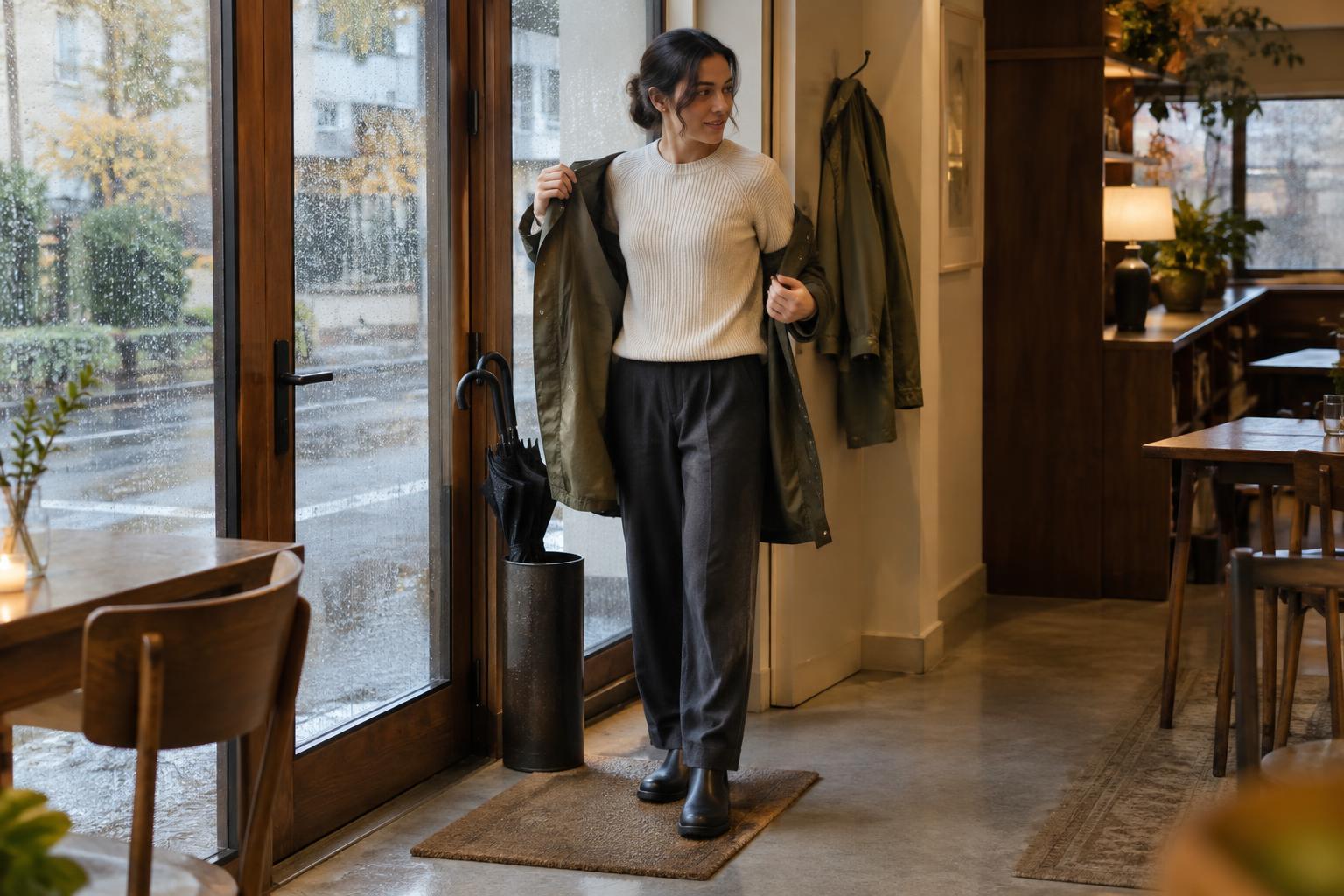
Labels such as water-resistant and waterproof can describe different levels of protection. For frequent or longer exposure, look closely at details such as the hood, closures and seams, not just the fabric name. For occasional light rain, an outer layer you already own may be enough. Indoors, hang the coat where it can dry if possible. Folding a wet coat onto your lap or over dry clothes can make an otherwise comfortable outfit feel damp.
Build a base that works at room temperature
Under your coat, favor pieces you can adjust without changing your whole outfit. A light cardigan or overshirt can come off if a room feels warm and go back on if it cools down. Avoid adding a thick sweater solely because it is raining; rain does not always mean cold. If you tend to feel chilly after a wet journey, an extra dry layer in your bag may be more useful than wearing everything at once.
Consider how fabrics feel if a little moisture gets past your outerwear. Heavy denim may take a while to feel dry again, especially at the cuffs. Lighter trousers that do not drag on the ground can be easier to manage. A skirt or dress can work well too, paired with legwear suited to the temperature and shoes that can handle wet pavement. There is no single rainy-day fabric rule: comfort, drying space and what you already like wearing all matter.
Give shoes and hems some thought
Feet often determine whether a rainy-day outfit feels comfortable indoors. Choose shoes with enough grip for the surfaces you expect to cross and uppers that suit the amount of rain. Ankle boots, sturdy trainers or other closed shoes may all work, depending on the conditions. If your route regularly leaves shoes wet, carrying a lighter indoor pair can be worthwhile when you have somewhere to store the outdoor pair.
Check trouser and skirt hems before you leave. Fabric that brushes wet ground or catches water from puddles can stay damp long after you go inside. A shorter hem, a simple cuff that stays in place or a different pair of trousers may solve the problem without changing your style. Socks deserve attention as well: a spare dry pair takes little space and can make a noticeable difference after an unexpectedly wet trip.
Make the transition indoors simple
A practical rainy-day bag setup can be modest: a place for your umbrella, a small pouch for items you want to keep dry and, if useful, spare socks. Put delicate papers or electronics where they are less likely to meet a dripping coat or umbrella. When you arrive, take off damp outerwear promptly and let it air rather than trapping it against your indoor layers.
Rain protection can still fit your personal style. A plain coat can frame a bright scarf, a patterned umbrella can add interest to neutral clothes, and coordinated shoes and bag can make a practical outfit feel deliberate. You do not need a separate wardrobe for wet weather. A few comfortable combinations, tested on the routes you actually take, are often the easiest way to get dressed and settle in once you are inside.